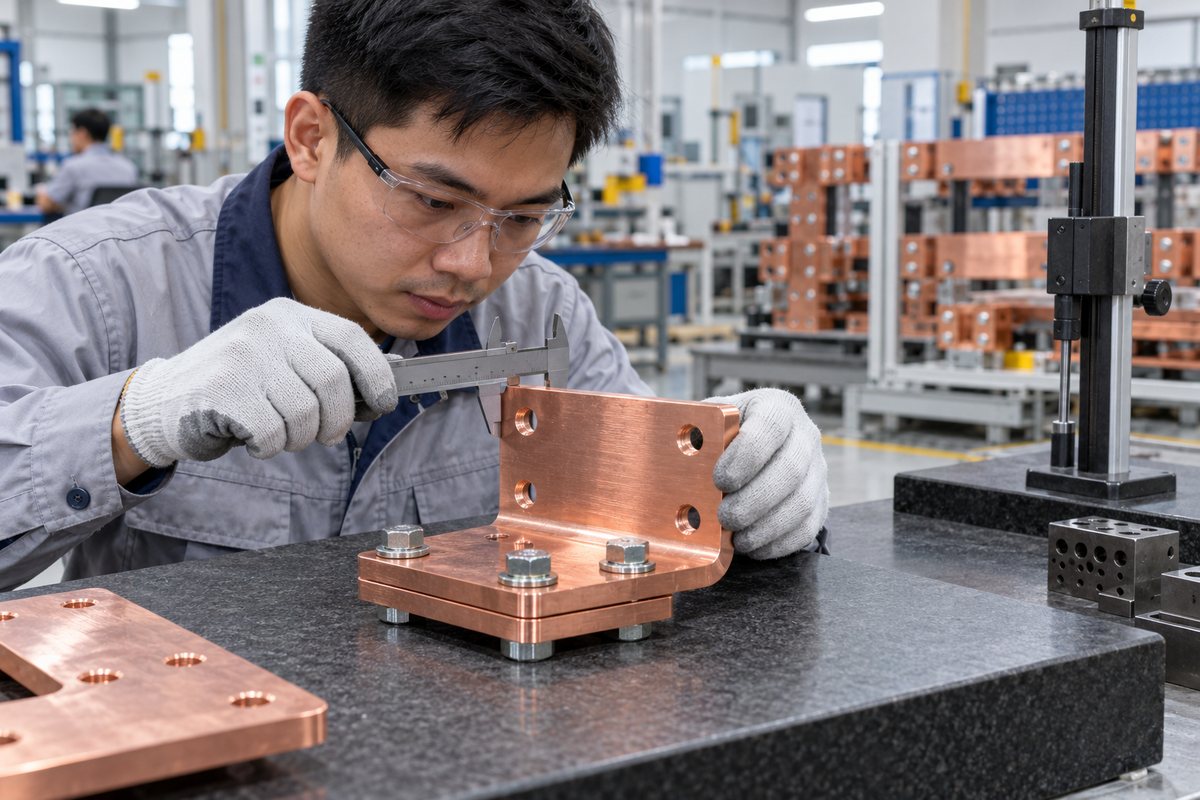
A conductive copper plate can still make a poor joint if burrs lift the contact face or holes force misalignment. Machining and electrical assembly checks must be specified separately.
Start with the joint stack-up
Provide mating plate geometry, fastener type, insulation spacing and required finish. Identify current path and contact area on the drawing; a generic copper outline does not define the electrical interface.
Machine and deburr the contact face
Relate face flatness and hole locations to assembly datums. Remove raised edges and drilling burrs without rounding away the required contact land. Plan any plating thickness and masked areas with the finish supplier.
Inspect before and after assembly
Check material identification, hole fit, contact-face condition and finish. Assemble with the customer's approved hardware and torque procedure. Electrical resistance or temperature-rise validation belongs to the agreed assembly test, not a bare CNC part certificate.
Quote the part and test separately
Send Vietlink Precision the STEP/drawing, copper grade, finish specification, mating component, batch quantity and inspection plan. State whether surface treatment and bolted assembly are included.