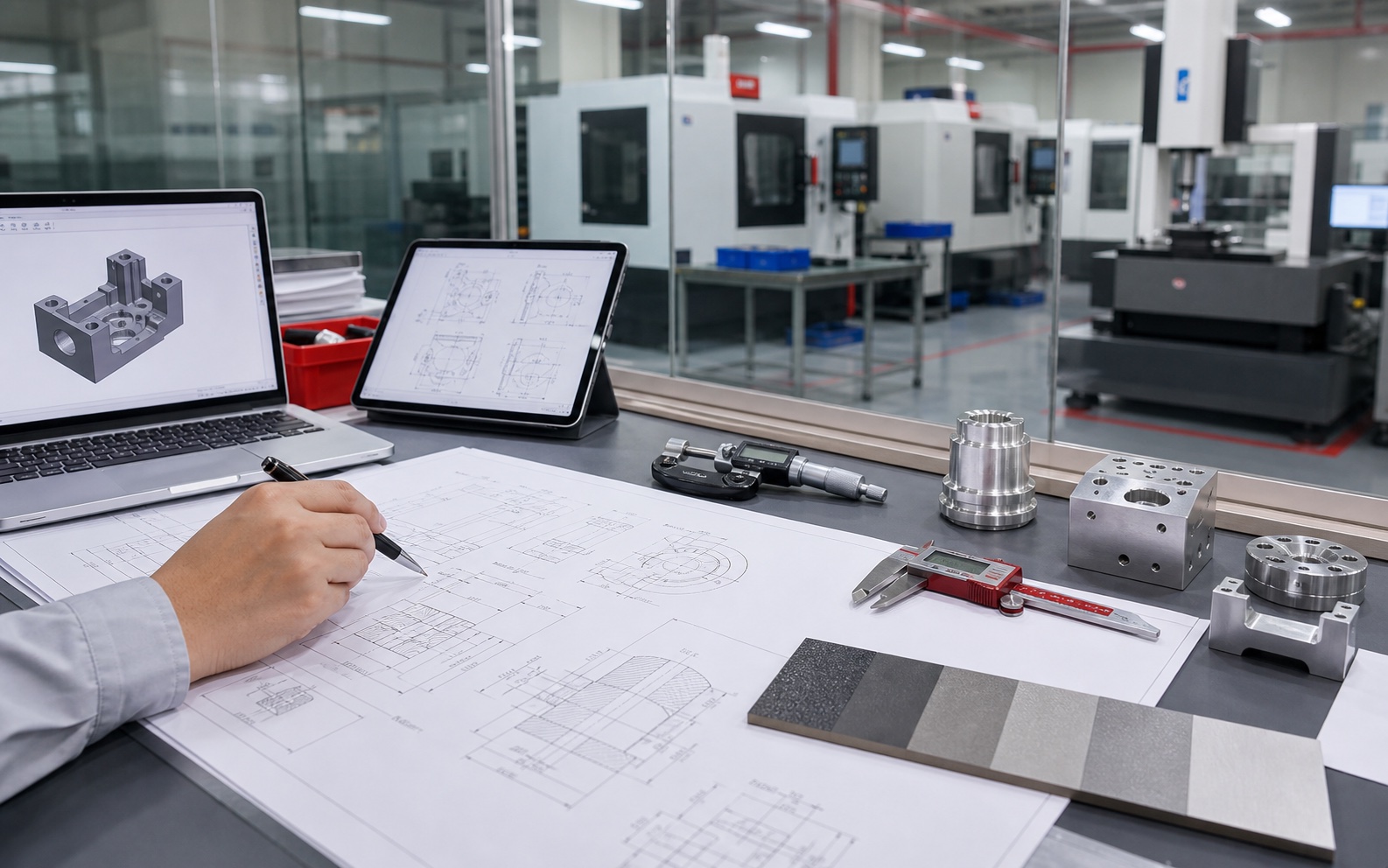
A clear RFQ helps engineering choose the right process, reduce repeated questions and shorten quotation time for CNC parts, fixtures and molds.
1. Send both 3D data and 2D drawings
STEP, IGS or X_T files help engineers review geometry quickly, while 2D drawings define tolerances, notes, datums and surface requirements. If several revisions exist, mark the latest version clearly.
2. Define material and surface treatment early
Aluminum, steel, copper, engineering plastic and stainless steel each affect machining time, cutting tools and inspection. Anodizing, plating, heat treatment or wear-resistance requirements should be included at the RFQ stage.
3. Highlight critical tolerances and functional surfaces
Not every dimension needs tight control. Mark locating holes, datum faces, assembly surfaces, critical pockets and functional dimensions so the factory can focus control where it matters.
4. Include quantity, delivery target and inspection needs
Sample quantity, batch quantity, delivery target and inspection report needs help the supplier choose a practical process. For fixtures and connector tooling, specify 2D measurement, height gauge or in-process inspection requirements.