Some CNC parts only work well when their datum faces stay flat and parallel after machining. This guide explains when grinding is worth adding, how to define the datum, and what information helps a supplier quote accurately.
Grinding is useful only on functional faces
A fine-milled surface is enough for many covers, brackets and spacers. Grinding becomes important when the face supports a fixture, locates a mold insert, carries a sliding surface or becomes the measurement datum for later assembly.
Define the datum before the quote
A general ±0.01 mm note does not tell the machinist what to control. Mark face A as the seating datum, specify which face must be parallel to A, and show how pin holes or slots relate to that datum. This prevents rework and avoids different inspection methods.
A stable sequence for plates and inserts
A common route is rough milling, leaving stock, semi-finishing, then grinding the functional faces. For mold steel or thin plates, the machining order, stress, clamping force and heat treatment sequence must be considered before cutting.
Inspection before shipment
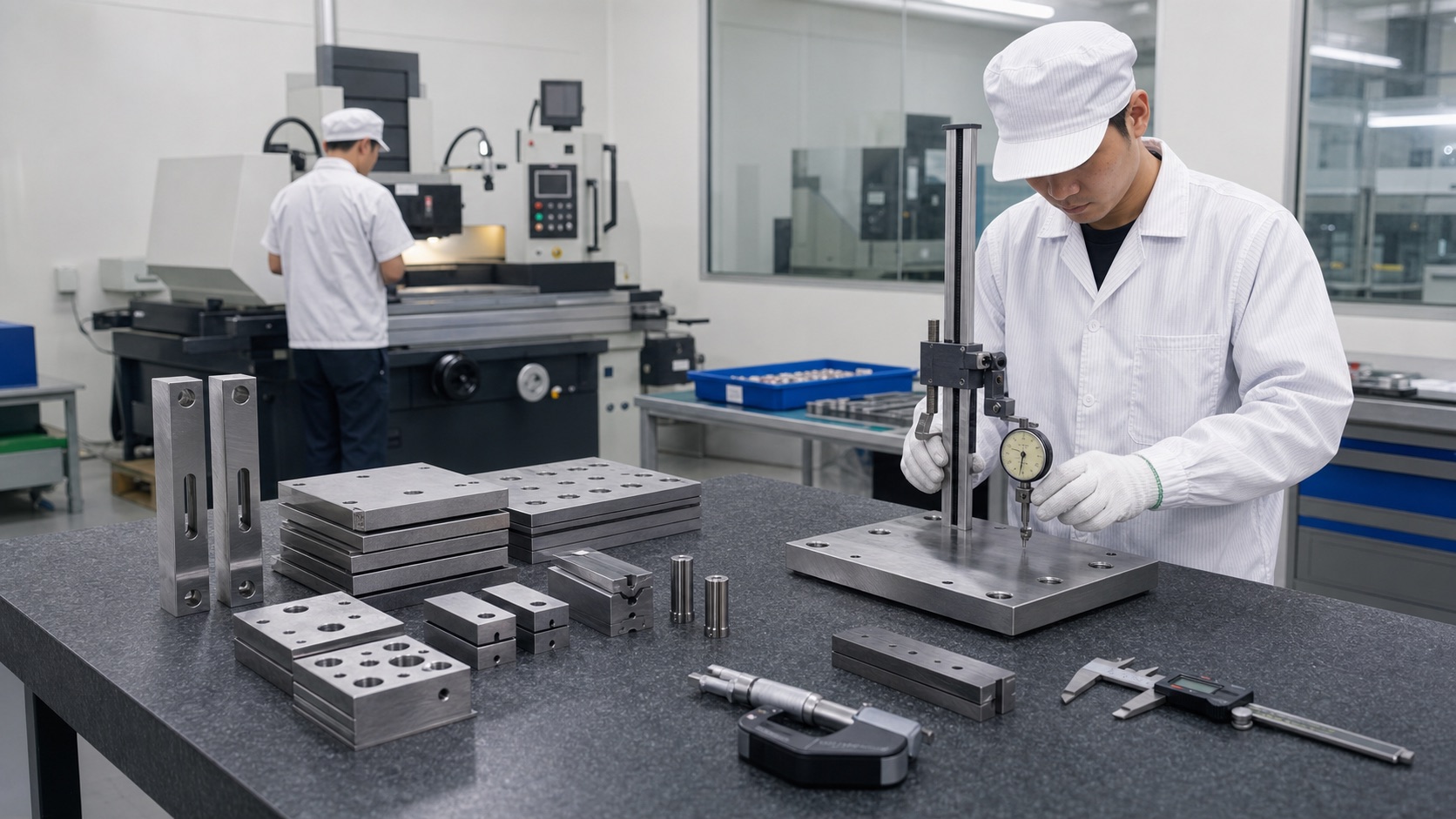
Flatness and parallelism can be checked with a granite table, dial indicator, height gauge and suitable fixtures. Profiles and slots may also require 2D inspection. Send 2D drawings, 3D files, material, quantity and surface requirements for a more reliable quotation.