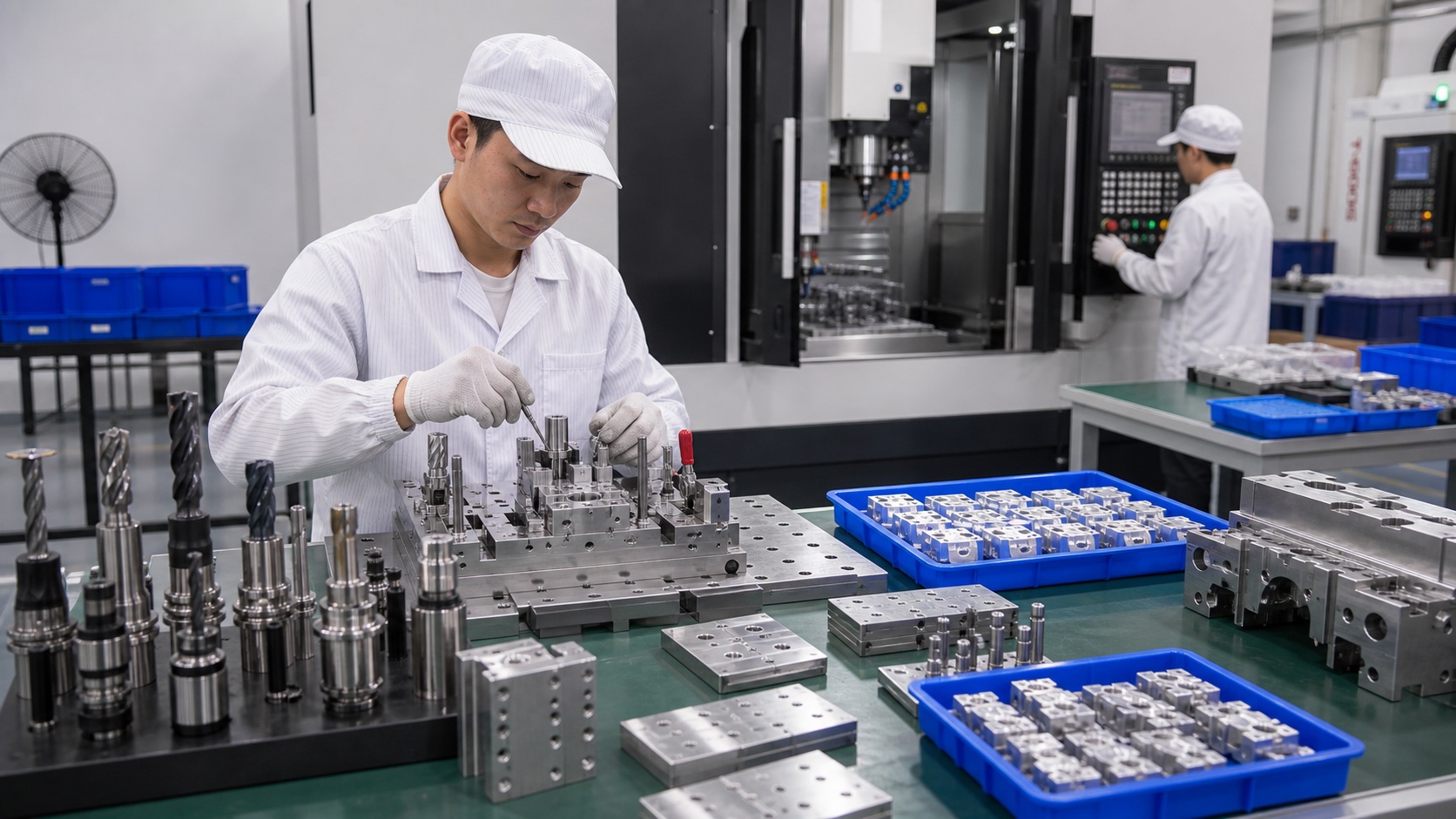
When buyers search for CNC jigs, fixtures, tooling or machining center capability, the most important step is defining the product to be positioned, operator workflow, tolerance and inspection criteria. Clear requirements reduce redesign and rework.
A fixture should not be ordered by outer dimensions only
A good fixture supports production work: fast positioning, secure clamping, no product scratches, easy part removal and easier inspection. In addition to drawings, buyers should share product photos, operation sequence, areas that cannot receive force and target cycle requirements.
Information needed before tooling design
Define which surface locates the product, which holes are datum features, allowable clamping force, production quantity, manual or semi-automatic operation and post-machining inspection method. For connector fixtures and small-part jigs, position tolerance, flatness and surface durability are often more important than overall shape.
How end mills, cutting tools and machining centers affect quality
CNC end mills, holders, toolpaths and machining center stability affect surface finish, locating holes and repeatability. For tooling parts, capability is not only about having machines. The supplier must choose the right cutting tools, machining sequence and workholding plan to avoid deformation or assembly error.
What projects fit Vietlink Precision
We support CNC machining, jigs, fixtures, clamps, cutting-tool-related tooling parts, small molds, connector fixtures and automation components. Buyers can send drawings, product photos or physical samples so we can review material, structure, tolerance and inspection process.