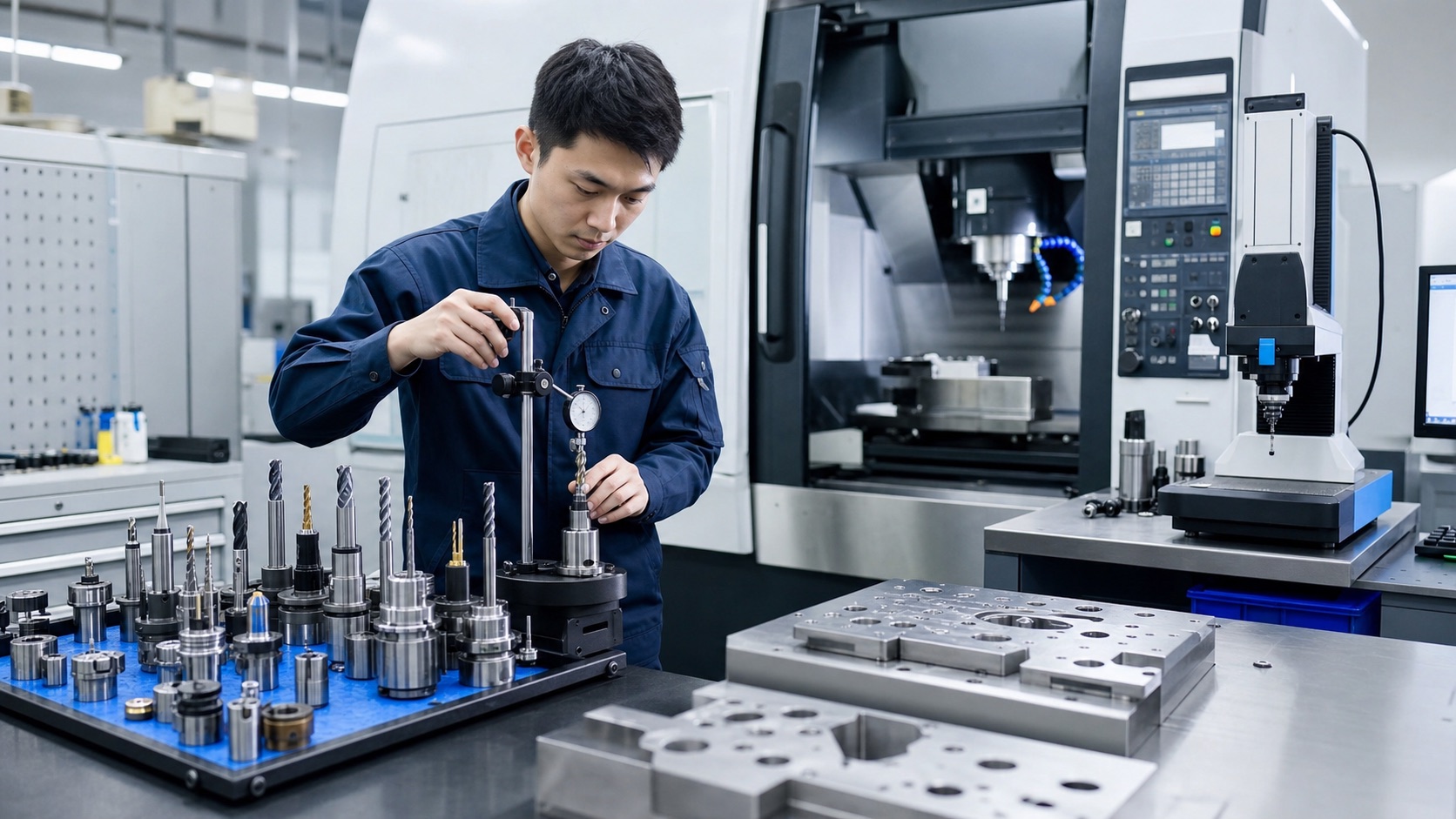
Parts made from the same drawing and program can still vary when cutters wear, collets are contaminated or runout is excessive. Cutting-tool control is therefore part of dimensional quality, not only machine maintenance.
Match the cutter to the material and feature
Aluminum, hardened steel, copper and engineering plastics require different edge geometry. Roughing, finishing and hole-making tools should be separated so a worn roughing tool is not used on a functional datum.
Check runout before machining
Chips on a collet or taper can offset a new cutter. Cleaning the holder and checking runout near the cutting edge helps stabilize bores, slots and locating surfaces.
Track tool life by part family
Tool life should reflect material, cutting length and completed quantity. Planned replacement when dimensions begin to drift is more reliable than waiting for a cutter to fail.
Confirm the first part after a tool change
After changing a cutter or holder, remeasure the first part's functional dimensions. Fixture plates and mold inserts usually require priority checks on locating holes, flatness and feature position.