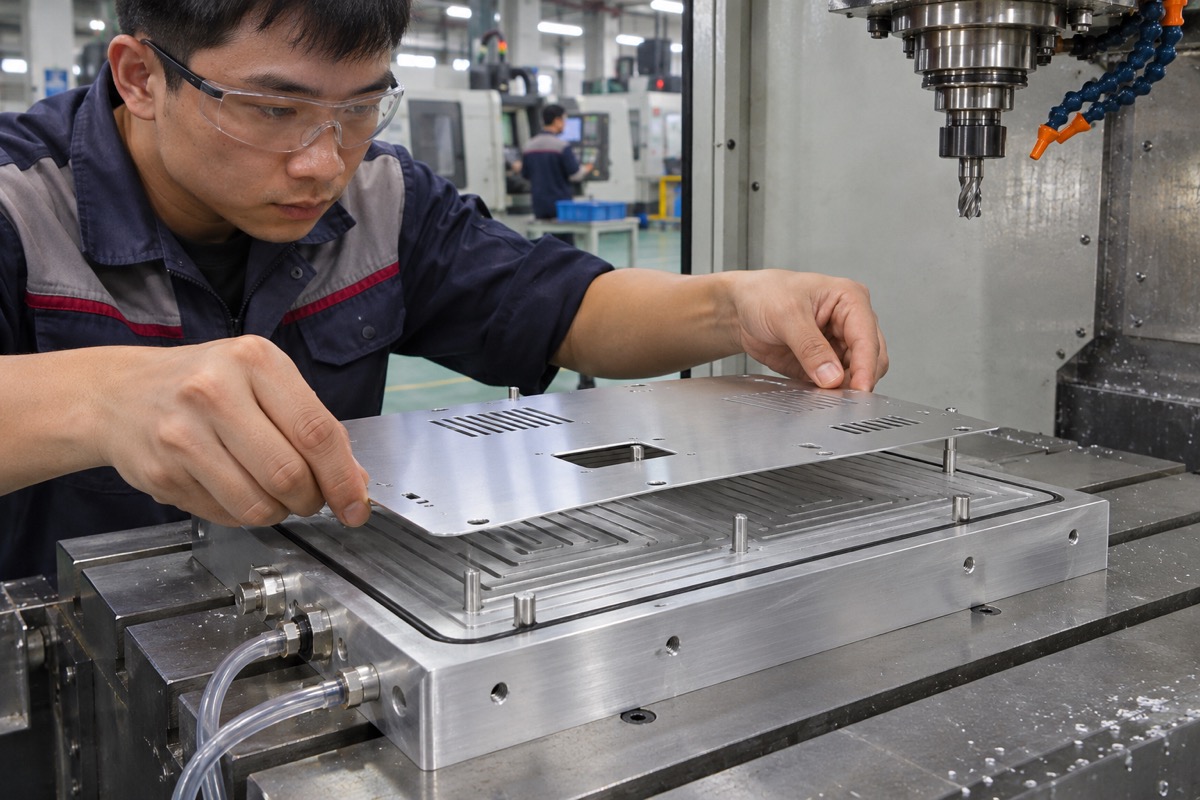
For thin covers, separate the flatness held on the machine from flatness after release. A vacuum fixture can support broad areas, but its seal and machining sequence must suit the actual cut.
Start with the free-state drawing
Provide cover thickness, alloy, cutouts, surface finish and which face seals against the product. Specify whether flatness is measured clamped or after release; these are different acceptance conditions.
Design the holding surface
Place vacuum zones under supported material, not across open pockets. Add locating stops, seal grooves and accessible ports. Confirm the pump can maintain holding force during the proposed cuts.
Machine to limit distortion
Agree roughing, finishing and deburring order. Avoid concentrating heavy cuts beside a thin rib; compare the first piece after unclamping before repeating the batch.
Inspect after release
Measure the free cover on a defined support method and test fit with the mating housing. Send CAD, sample housing, quantity and the inspection condition for quotation.