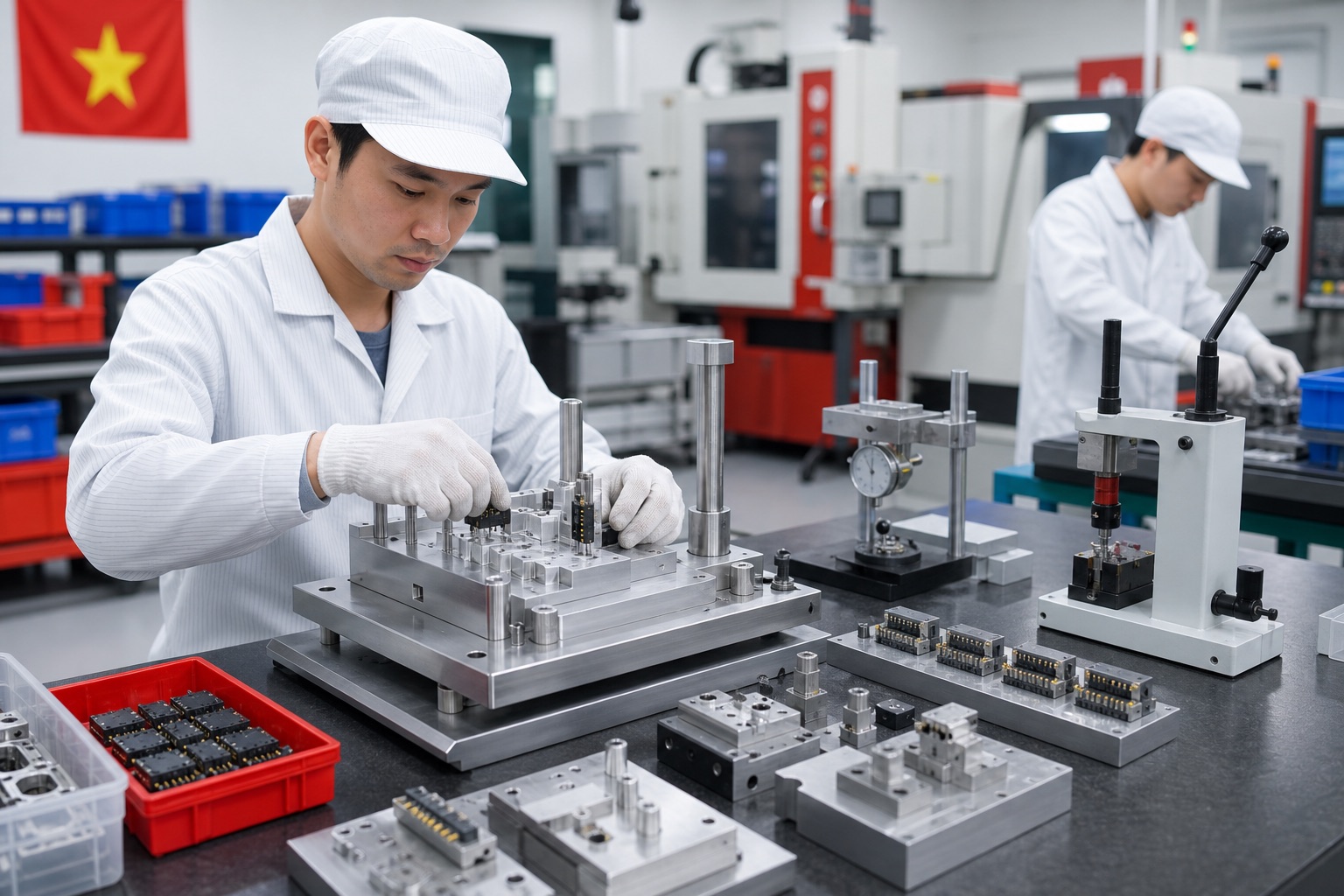
Connectors are small, delicate and sensitive to assembly variation. Well-designed fixtures, molds and semi-automatic equipment reduce defects by controlling datum location, press force and in-process inspection.
Location is the first quality control point
For connectors, a tiny offset in a pin, housing or mating position can cause jamming, height variation or unstable contact. A fixture should define clear datums, use appropriate locating pins and avoid clamping force that deforms the part.
Press force must be repeatable
Many connector processes require pressing, snapping or inserting metal contacts into plastic housings. Too little force leaves parts unseated; too much force may crack plastic or bend pins. Semi-automatic stations should control stroke and stopping position.
Fixtures and molds should be maintainable
During repeated production, dust, small debris or worn pins can change results. Fixture design should allow locating pins, inserts and contact surfaces to be cleaned, replaced and checked without a long stop.
Inspection belongs inside the process
Finding defects only at the final step increases scrap. Connector lines can add checks for height, orientation, pin position, insertion force or visual condition immediately after key operations.
What to send before fixture design
Useful inputs include product drawings, physical samples, process requirements, target output, current defect examples and inspection standards. The engineering team can then recommend a manual fixture, semi-automatic station or staged improvement plan.