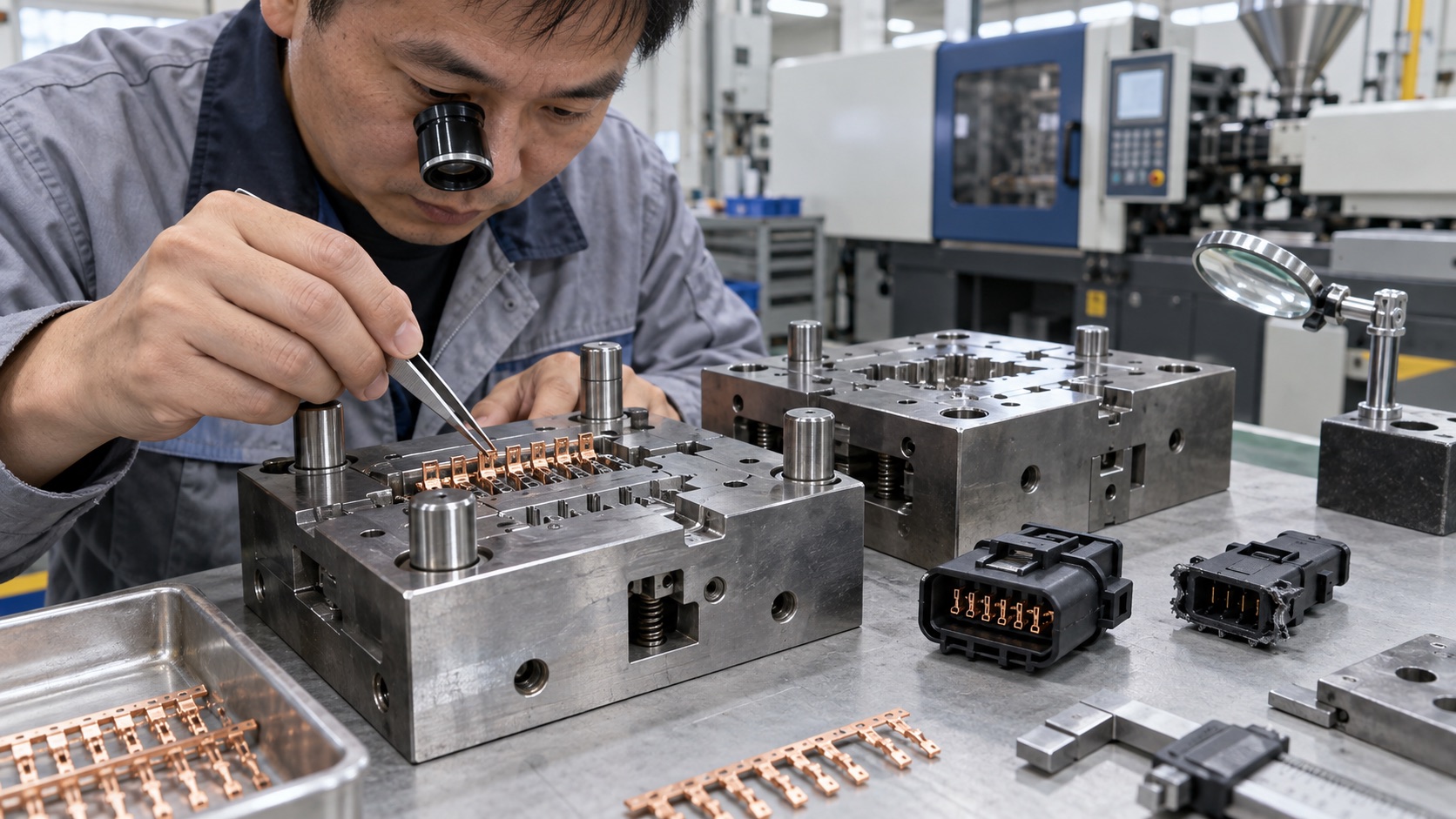
Insert-molded connector housings combine thin metal terminals with high-pressure plastic flow. A terminal that shifts only slightly can change pin position, reduce sealing steel or damage a contact surface. Stable production depends on how the strip or loose insert is located, retained, checked before closing and released after molding.
Locate from functional terminal features
Choose datums that control mating position, pitch and height, not a trimmed edge that varies with stamping. Support the insert close to the plastic pressure zone and provide clearance for normal strip variation. For loose inserts, loading nests should orient the part before it reaches the mold and make a missing or reversed insert easy to detect.
Prevent float without marking the contact area
Resin flow can lift or push an insert if retention is weak. Use balanced mechanical capture, spring-loaded support or approved magnetic/vacuum assistance where appropriate. Shutoff steel must seal around the insert without crushing plating or conductor features. Wear at the nest, spring or shutoff should be measurable and replaceable.
Validate position, flash and electrical function together
A good trial checks pin pitch, coplanarity, insert depth, exposed contact surfaces, flash and plastic fill by cavity. Vision can verify presence and orientation before mold close; after molding, dedicated gauges and electrical tests confirm function. Vietlink Precision can machine loading nests, mold inserts and inspection fixtures, with spare wear components referenced to the approved master sample.