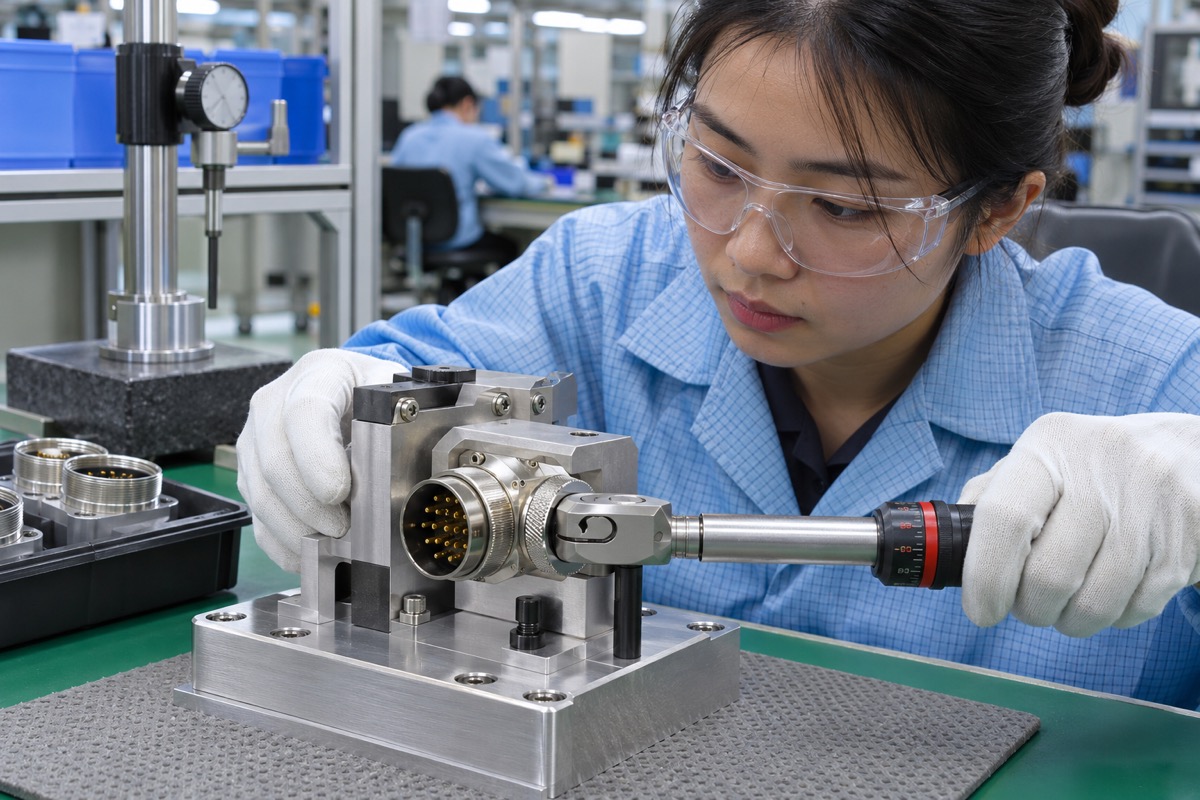
A torque wrench reading is not enough if the fixture twists the contacts or cable first. Locate the shell, react torque through a robust surface and agree the test sequence.
Define what is being tested
Provide connector and backshell drawings, coupling method, target torque or retention requirement and whether the test is destructive or reusable.
Choose the reaction path
Support a strong shell feature while clearing pins, seals and cable. A soft nest may protect appearance but still needs positive anti-rotation.
Machine and inspect the fixture
Control nest geometry, stop position and tool access from one datum. Trial with a real connector and check it seats without bending contacts.
Run an agreed protocol
Record tool calibration, tightening or breakaway direction, speed and pass limit. Distinguish the connector result from fixture slippage and retain a representative test record.