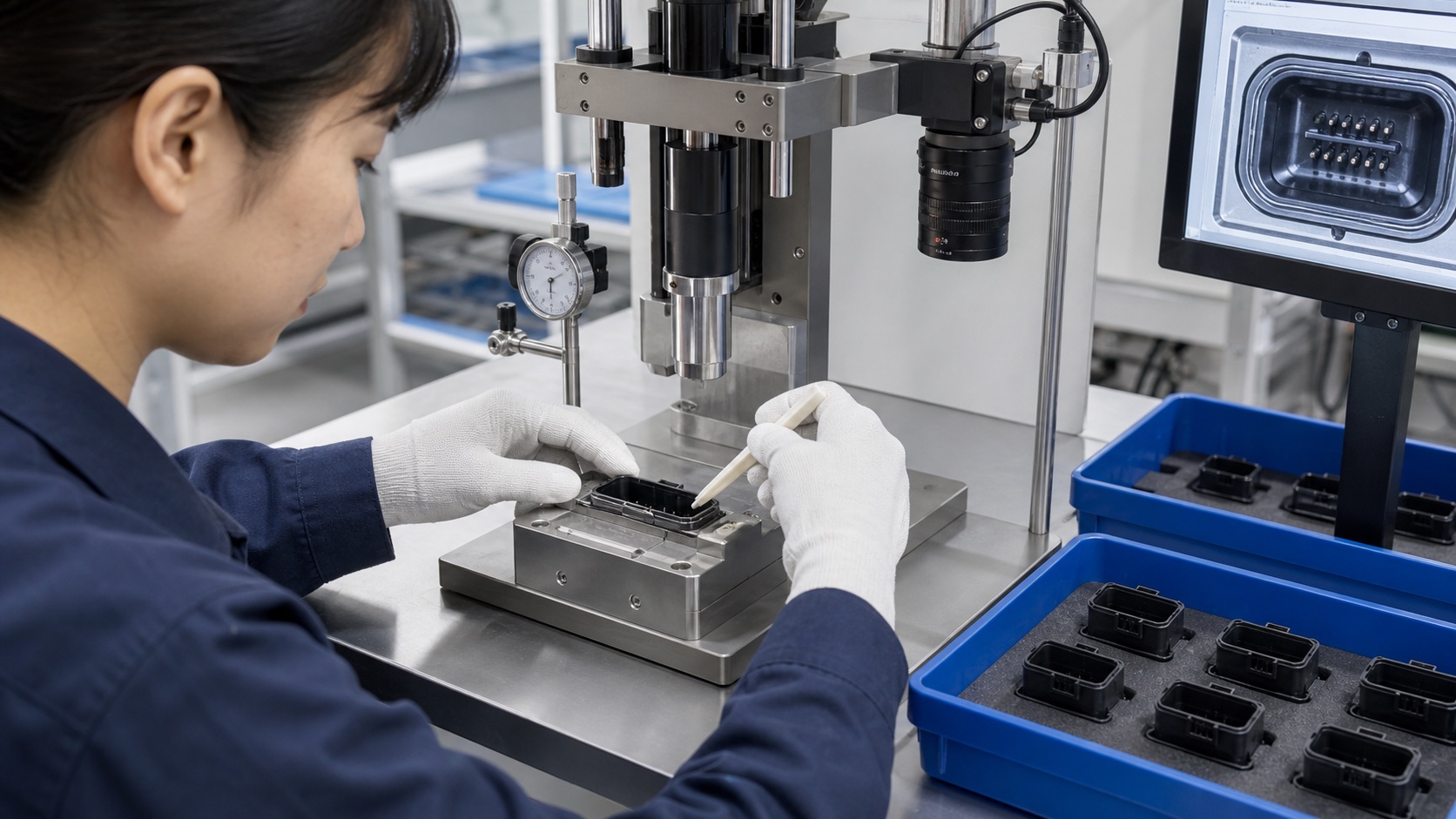
A seal may look installed while it is twisted, stretched, outside the groove or standing proud. Housing location, seal guidance, insertion control and post-assembly verification need to work as one process.
Locate the housing without distorting the groove
The nest references stable housing features, prevents reverse loading and supports close to the insertion area. Clamping must not squeeze the housing enough to change seal-groove geometry.
Guide the seal around its actual geometry
Cones, sleeves or compliant insertion heads distribute stretch and protect the edge. Contact materials should neither scratch the housing nor cut or drag the elastomer.
Monitor insertion force and position
A mechanical stop sets final depth; travel sensing or a force-displacement curve can detect a missing, doubled, tilted or obstructed seal. Limits should be developed with known-good and defect samples.
Verify presence and seating after insertion
Vision can check a continuous seal perimeter, orientation and proud regions. Height measurement or leak testing supplements vision for critical sealing functions, while quick-change nests support product variants.