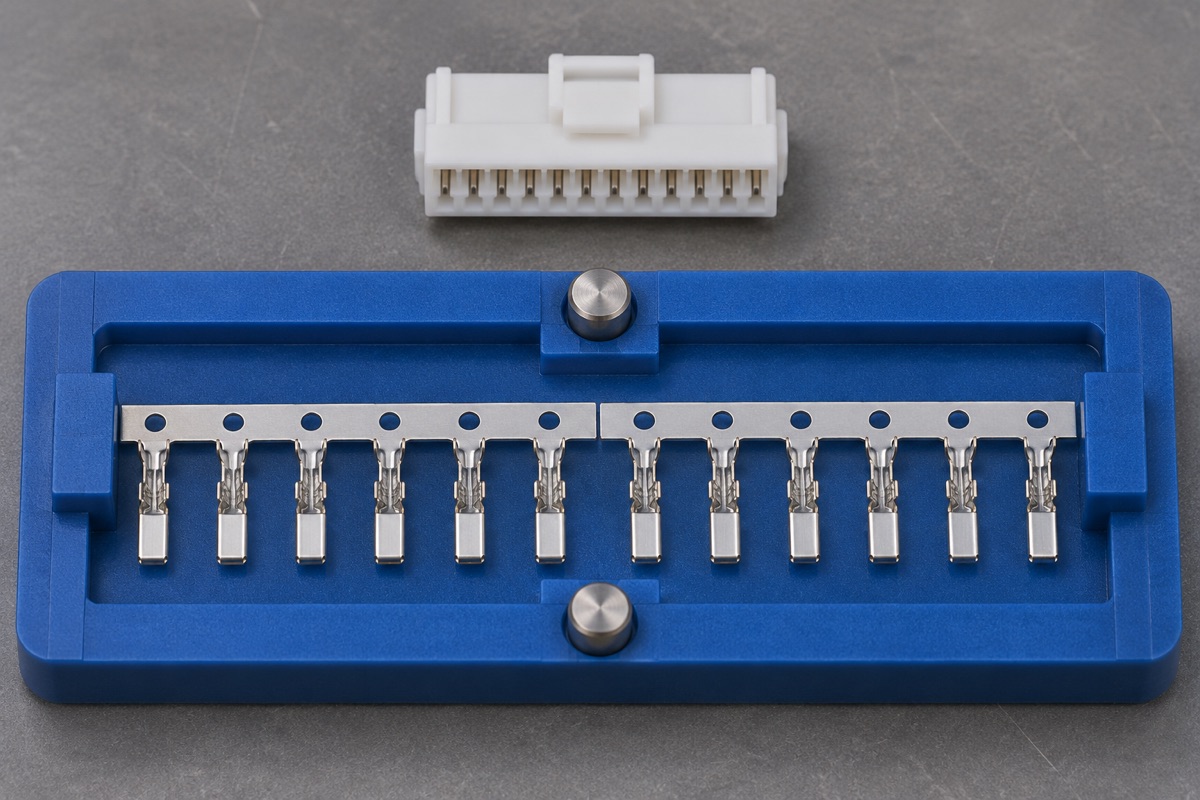
A feeder that runs cleanly until the first index on the next reel gives you a useful clue. Keep both reel ends. The cut edges can touch perfectly while the next feed hole is out of reach. First establish whether this terminal and applicator permit a splice at all.
Check the permitted reel-change method
Identify the strip part number, feed direction, approved joining method and whether a joint may pass the tooling. If the supplier specifies stopping and rethreading, quote a changeover locator or first-piece gauge instead of a fixture that sends a splice into the applicator.
Reference the features that actually index
Locate intact carrier holes on each side. Measure from the center of the last usable hole on the old reel to the first usable hole on the new reel and compare with adjacent uninterrupted pitches. Support the carrier spine without bearing on plated contact faces or crimp wings.
Check the physical envelope off-line
A joint of the right pitch can still sit high, skew sideways or present a raised edge. With scrap samples, use a bench gauge representing the tightest guide section. Changing feed travel for an entire reel is not a remedy for one thick joint.
Agree where good production resumes
Isolate the equipment for setup per its instructions. Have authorized staff trial the approved changeover and segregate terminals around the joint. Record the first acceptable index and any required first-off crimp checks. For a quote send reel-end samples, the guide section and the approved splice rule.