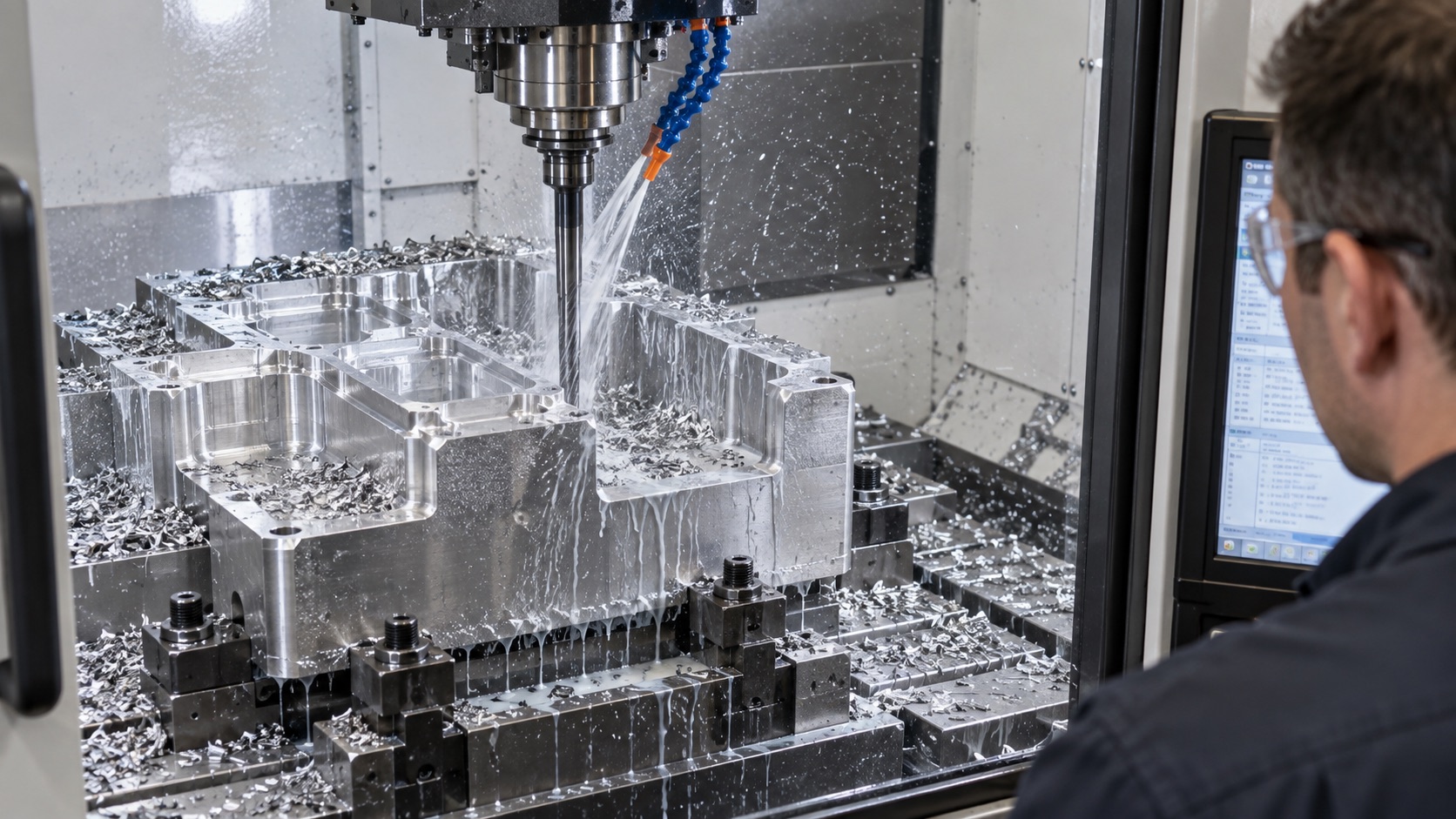
Deep pockets are rarely solved by slowing the machine alone. Long tool reach reduces stiffness, trapped chips are re-cut, and a thin remaining wall may move as material is removed. A robust process separates bulk removal from long-reach finishing and includes a way to verify datums before the final metal is cut.
Review reach, corner radius and access before programming
Tool diameter and flute length must fit the smallest corner and deepest level, but unnecessary overhang multiplies vibration risk. Identify areas a standard tool can rough first, then reserve long-reach tools for the remaining depth. If the design allows, a larger internal radius and open chip path improve stability and reduce cost.
Use staged stock removal and leave predictable finishing allowance
Helical entry or ramping avoids a full-width plunge. Rough from the top down with stable radial engagement, remove chips before they pack, and leave uniform wall and floor stock. Semi-finishing restores a consistent surface after roughing movement; the final pass then cuts a small, controlled load rather than correcting uneven material.
Inspect datums and deep features before unclamping
Coolant or air must reach the cutting zone without driving chips into a blind corner. Monitor sound, spindle load, tool wear and chip shape. Probe accessible datums and critical walls in the same setup, then confirm depth, position and surface with CMM or suitable gauges. Vietlink Precision can plan fixture support and CNC/EDM alternatives when a feature is too slender for stable milling.