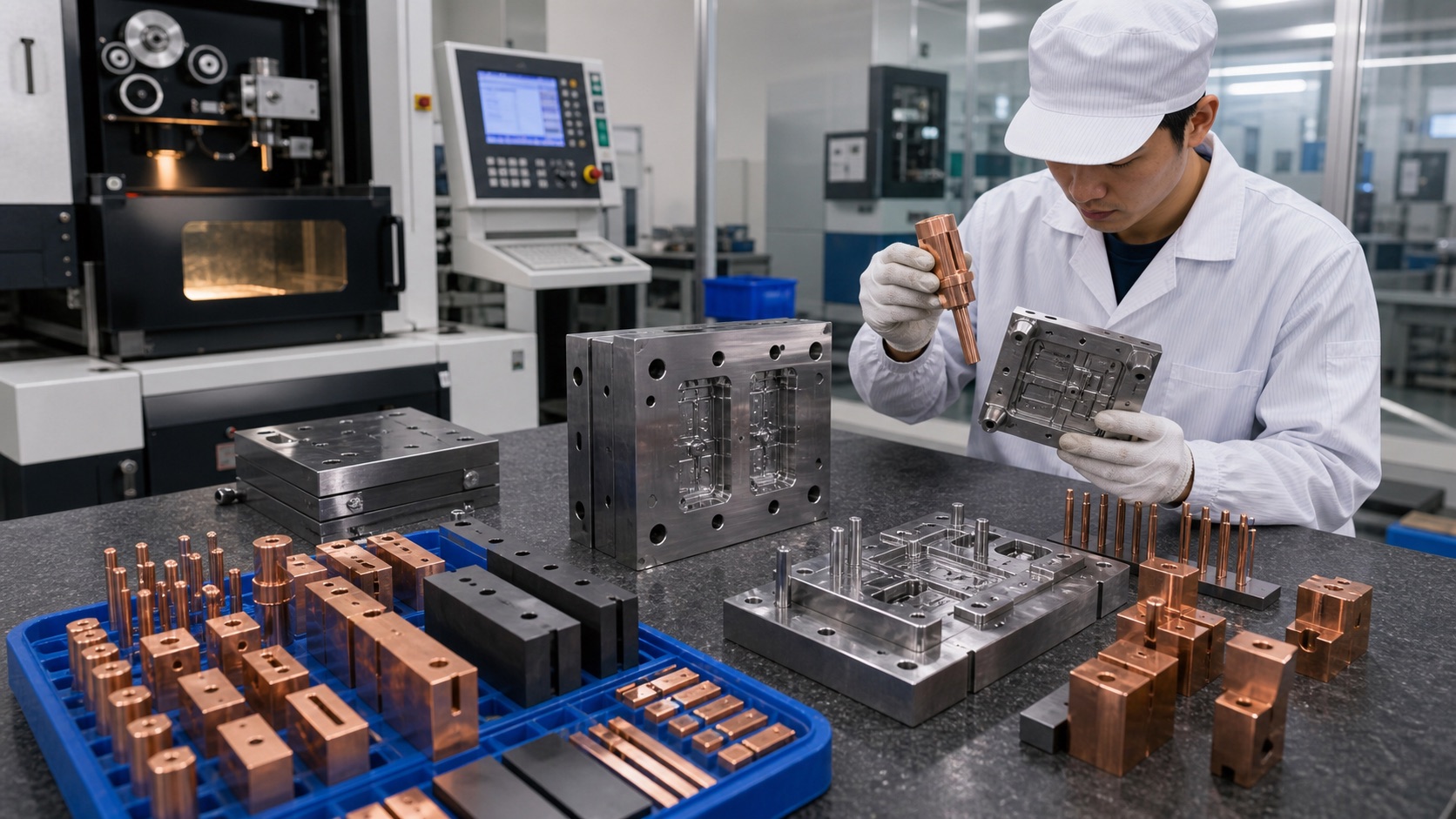
When a mold insert has deep pockets, small ribs or internal details that cutters cannot reach, EDM quality depends on electrode design, discharge allowance, setup datum and inspection after burning.
Where EDM adds value
Deep cavities, small ribs, sharp internal corners and connector pin areas often cannot be milled cleanly with standard cutters. EDM can form these local details, but the electrode must be designed for discharge allowance and required surface finish.
Electrodes need datum control too
Copper or graphite electrodes should have a clear setup datum, burning direction, offset and working surface. If the electrode is made without a measurement plan, the insert may be difficult to verify after EDM.
Coordinate CNC, EDM and polishing
A typical insert route is CNC roughing and finishing where tools can reach, followed by EDM for deep or small details. Product-contact surfaces should specify polish level, texture requirement and whether sharp edges are functional.
Inspection after EDM
After EDM, check location, depth, narrow gaps, burrs and burn marks. For connector tooling, product-contact edges require close inspection to avoid scratching plastic housings or shifting terminal positions.