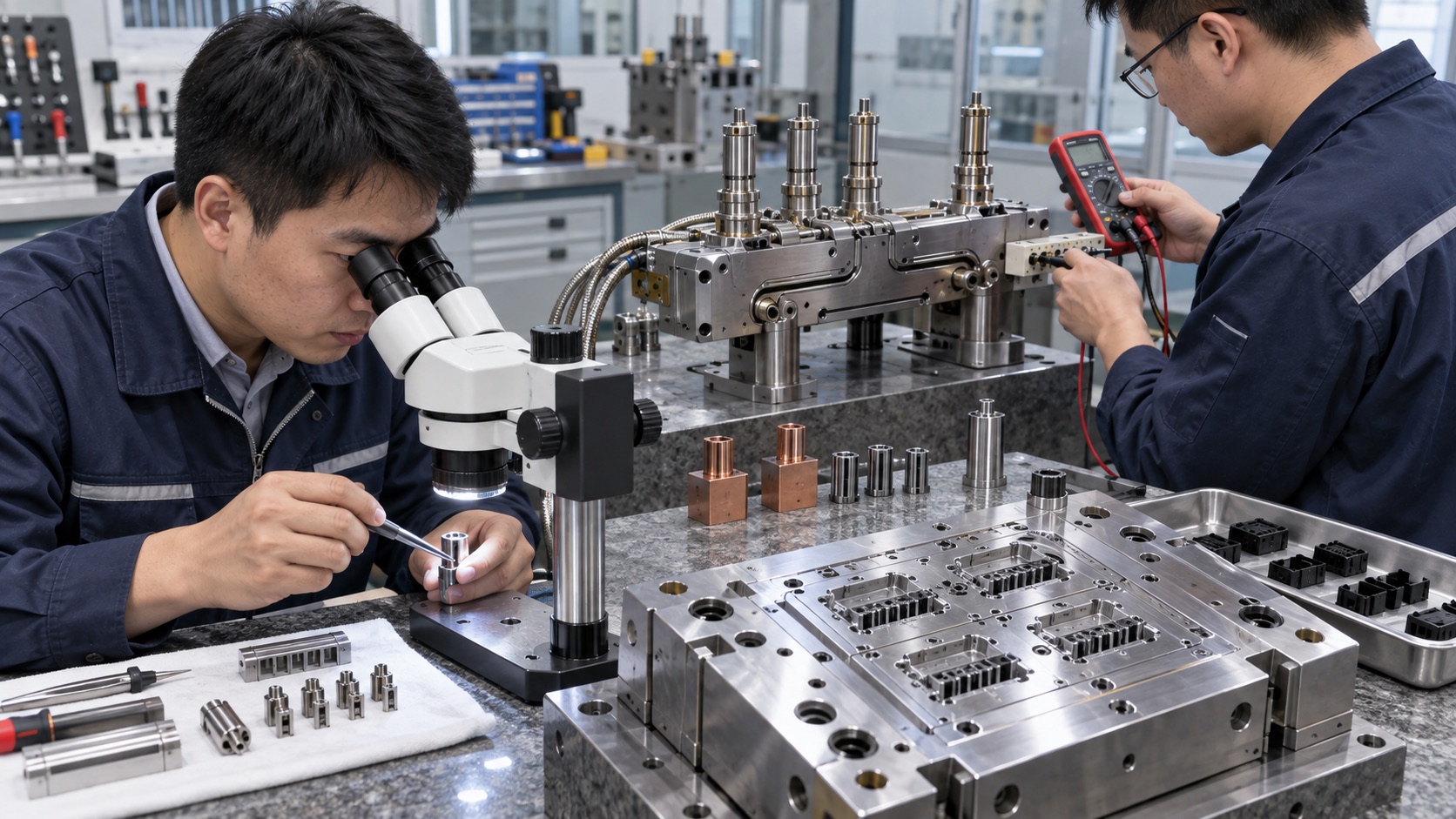
Gate vestige changes, intermittent short shots or rising set temperatures are often treated as isolated process issues. In a hot-runner mold they can also indicate gate wear, polymer leakage, poor contact, heater degradation or thermocouple error. Safe maintenance begins with the original supplier instructions and a documented cold inspection, not uncontrolled grinding at the machine.
Separate process symptoms from hardware evidence
Compare temperature history, cavity balance, gate appearance and startup behavior. Look for polymer tracks, discoloration, fretting, cable damage, unstable resistance and impressions at support or sealing areas. Record each drop separately; one abnormal zone should not trigger machining of every cavity.
Measure sealing and reference geometry before repair
Clean only with approved methods and protect the melt channel and electrical components from contamination. Check gate diameter, insert height, nozzle seating, support dimensions and contact surfaces against the system drawing. A worn gate may need a matched insert or OEM component; changing one dimension can alter preload, heat transfer and leak protection.
Reassemble, test and keep traceable spares
Confirm heaters, thermocouples, insulation and grounding before heating. Follow the specified assembly temperature, torque and sequence, then perform a controlled leak and cavity-balance trial. Vietlink Precision can machine approved mold-side gate inserts, seats and gauges, but proprietary hot-runner internals should follow the system supplier's requirements. Store measured spare parts with revision and installation records.