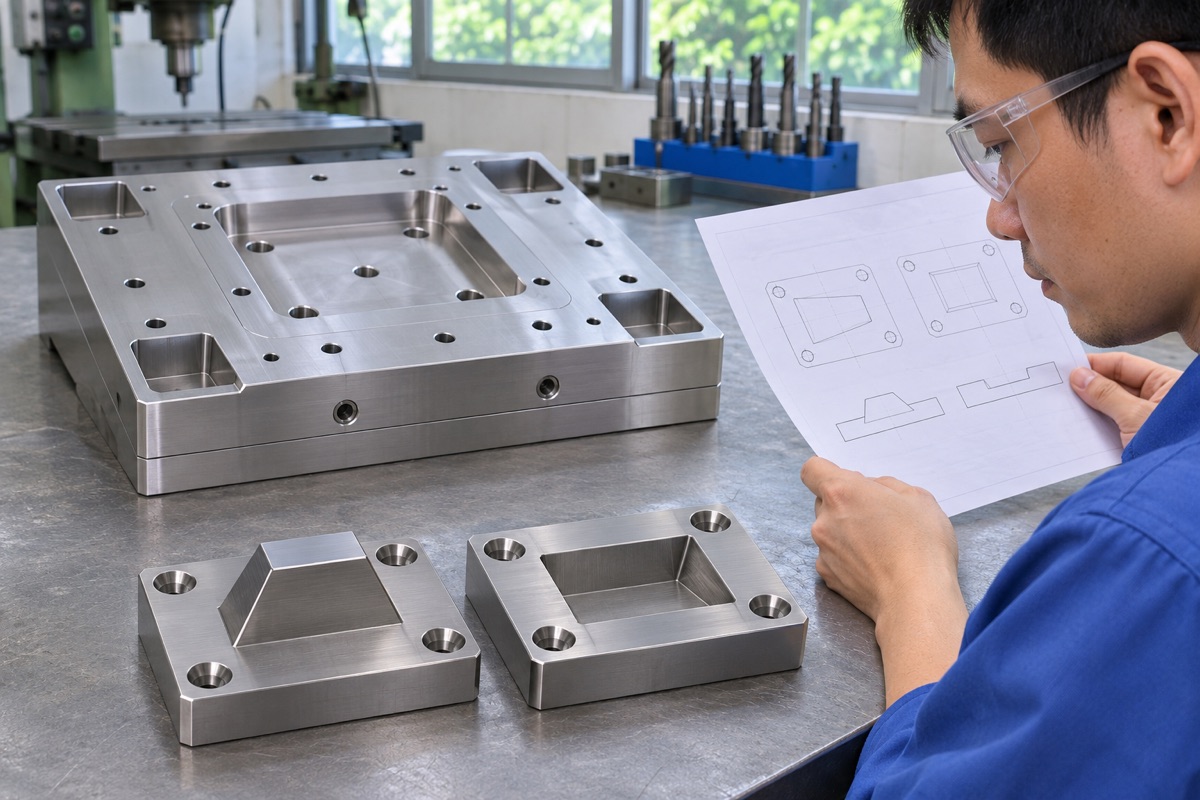
A step at the core-to-cavity join that remains after fitting new interlocks can originate in the support behind them. This guide addresses rectangular tapered interlock repair checks. Required contact faces and seating rules depend on the selected family; do not copy a round interlock's fitting detail.
Separate mismatch from a parting gap
Use the molded step, parting line and critical drawing features to identify the displacement direction. Check whether apparent flash instead comes from local damage or an opening. Leader pins, bushes, interlocks, insert seats and plate distortion can all contribute. Raising clamp force does not establish the missing datum.
Retaining screws are not a substitute for pocket support
Under the safe maintenance procedure, inspect pocket walls, floors, burrs, dents and old shims off-machine. Measure interlock position from the parting reference. In a design that transmits alignment reaction through the pocket edge, tighter screws do not repair an enlarged seat. Let measurements decide between a replacement block and a pocket repair.
Inspect the working pair
A male insert profile report does not cover its mate or installed location. Keep pair and position IDs, then inspect the taper and any other specified contact zones. Premature contact at one area can prevent proper seating elsewhere. Record fitting changes instead of imposing one face gap on every interlock family.
Verify alignment at operating conditions
If the mold halves run at different temperatures, review layout and thermal growth direction. Qualified staff should trial the tool under the equipment procedure, comparing critical mismatch dimensions across cavities and stable cycles. Assess flash separately. Send Vietlink Precision the interlock code, pocket drawing, plate temperatures, wear photographs and failed parts to separate spare-part machining from seat repair.