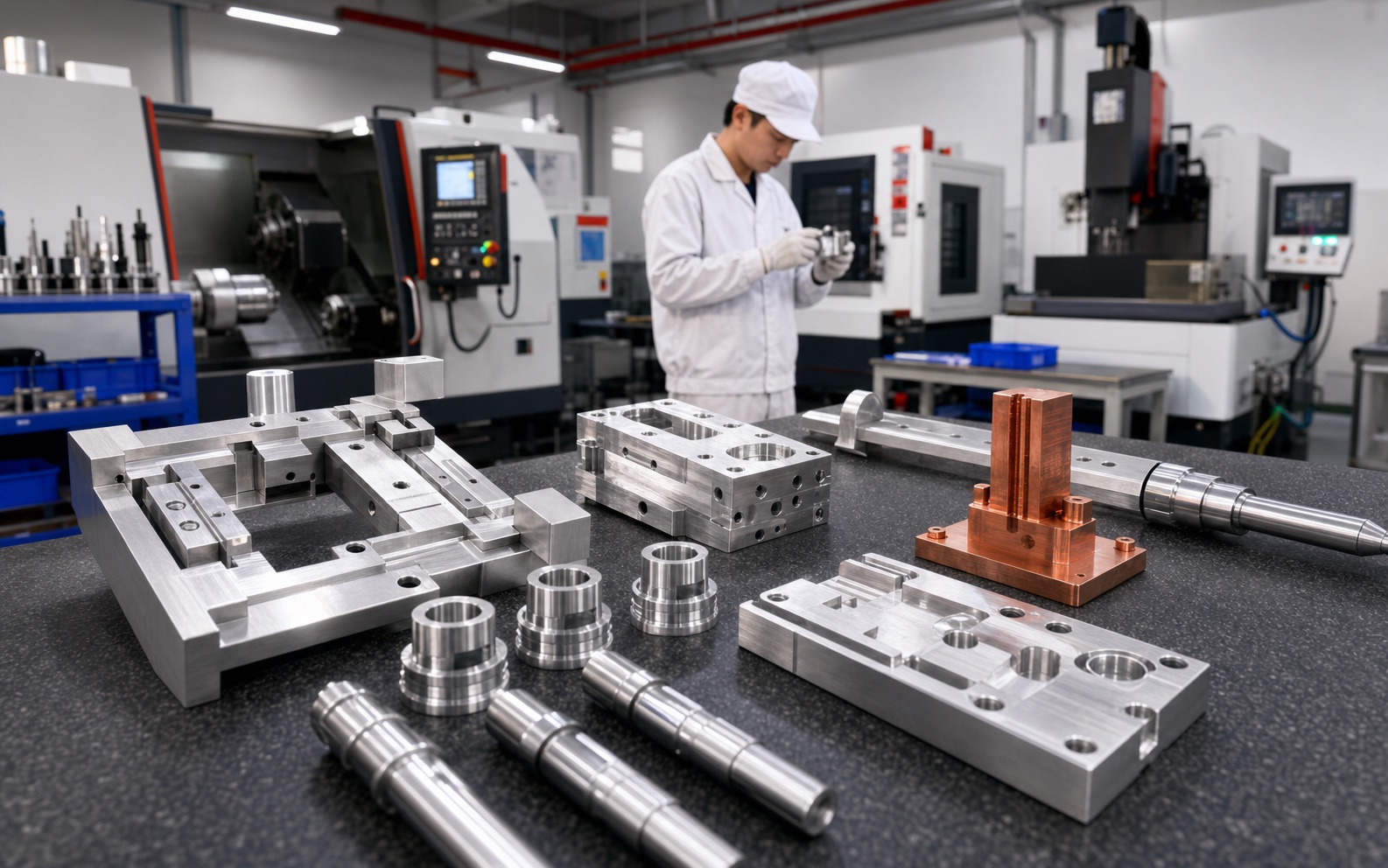
Japanese buyers often search for CNC turning, CNC milling, aluminum CNC machining or jig fixtures, but the best process depends on geometry, tolerance, material and assembly function. Choosing the right process reduces dimensional risk.
1. CNC milling suits plates, blocks, holes and assembly faces
CNC milling is commonly used for locating plates, blocks, slots, pockets, holes and fixture assembly faces. For multi-face parts, setup order and locating references control parallelism, squareness and hole position.
2. CNC turning suits shafts, sleeves, pins and round parts
CNC turning is suitable for shafts, sleeves, pins, spacers and threaded parts. If a part has round surfaces plus off-center holes or milled faces, turning and milling may need to be combined.
3. Aluminum and metal machining require different controls
Aluminum machines efficiently and is often used for fixtures, plates, housings and lightweight parts. Steel, stainless steel and harder metals require stronger control of tooling, heat, burrs and post-machining stability.
4. Jigs, fixtures, wire cutting and EDM solve difficult shapes
For narrow slots, small internal corners, complex profiles or mold details, wire cutting and EDM may be more effective than standard milling. Jigs and fixtures stabilize positioning, assembly and repeat inspection.
5. Inspection should follow assembly function
Functional dimensions, datum faces, hole positions, flatness and assembly surfaces should be prioritized in the inspection plan. Repeat projects should keep inspection points for stable delivery.