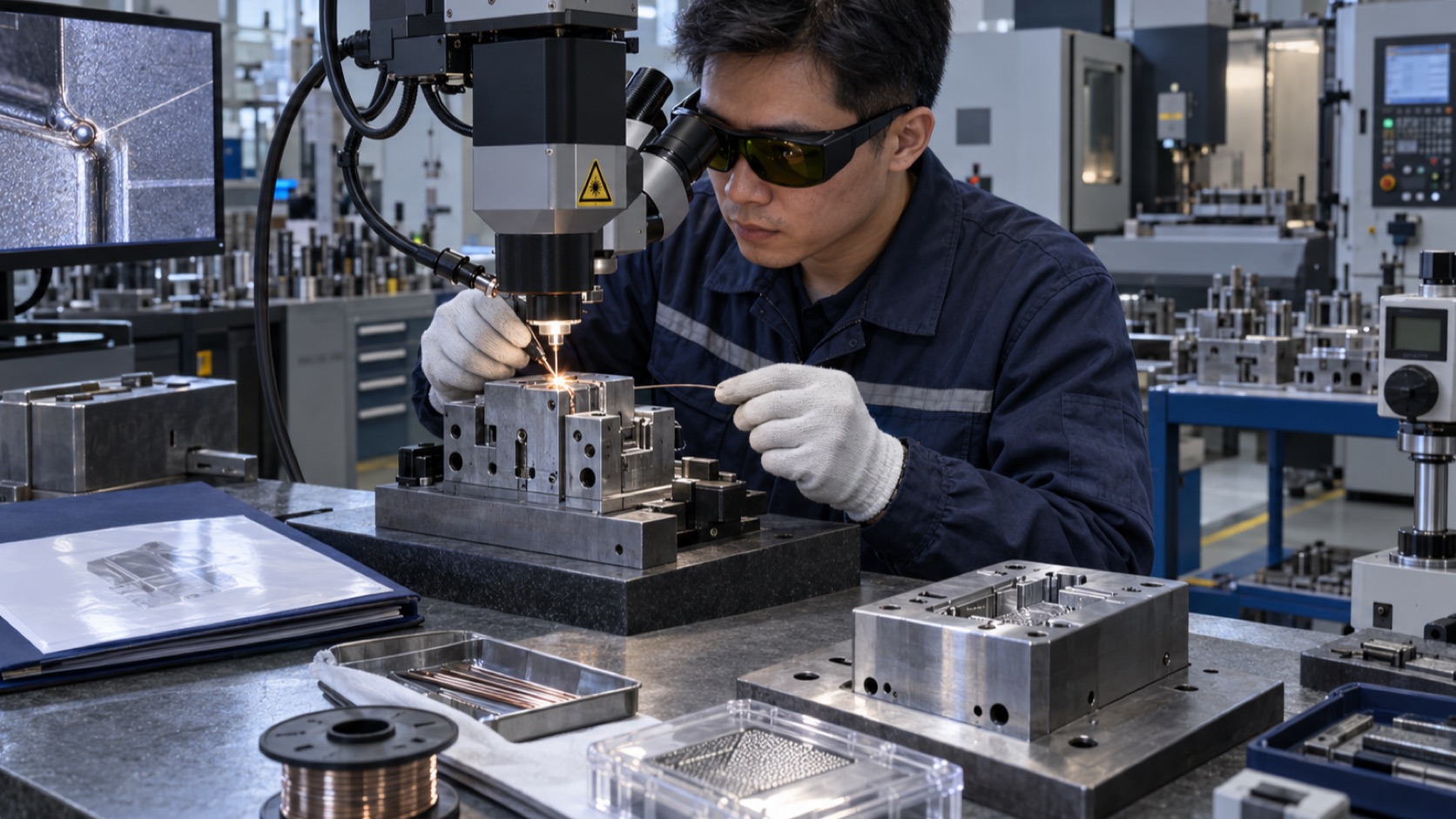
Laser welding can restore a worn shutoff, chipped corner or overcut cavity with less heat input than a broad conventional weld, but the repair is not complete when the bead looks smooth. Base steel, filler, preheat, hardness transition and remachining determine whether the area will polish, texture and wear like the surrounding insert.
Confirm the steel and remove damage to sound material
Identify insert grade, heat-treatment condition, coating and prior repairs before selecting filler. Map the functional surface, crack or overcut and protect nearby shutoffs, vents, texture and datums. Remove contamination, plating and cracked material to a clean, gradual repair pocket; welding over an unknown defect only hides a future failure.
Control heat and leave a deliberate machining allowance
Follow the steel supplier's guidance for preheat, interpass temperature, filler and post-treatment. Use small balanced beads and avoid abrupt stops at critical corners. Leave enough weld for CNC, EDM, grinding or hand finishing, but not so much that unnecessary heat and removal distort the insert. Record welding parameters and filler lot with the repair.
Rebuild geometry and approve the molded result
Re-establish datums before machining, then verify size, position, shutoff contact and hardness transition. Use penetrant or another suitable crack check when risk requires it. Restore polish or texture only after geometry passes, trial the specified resin and inspect flash, release, gloss and witness boundary against an approved sample. Update the mold maintenance drawing and spare strategy.