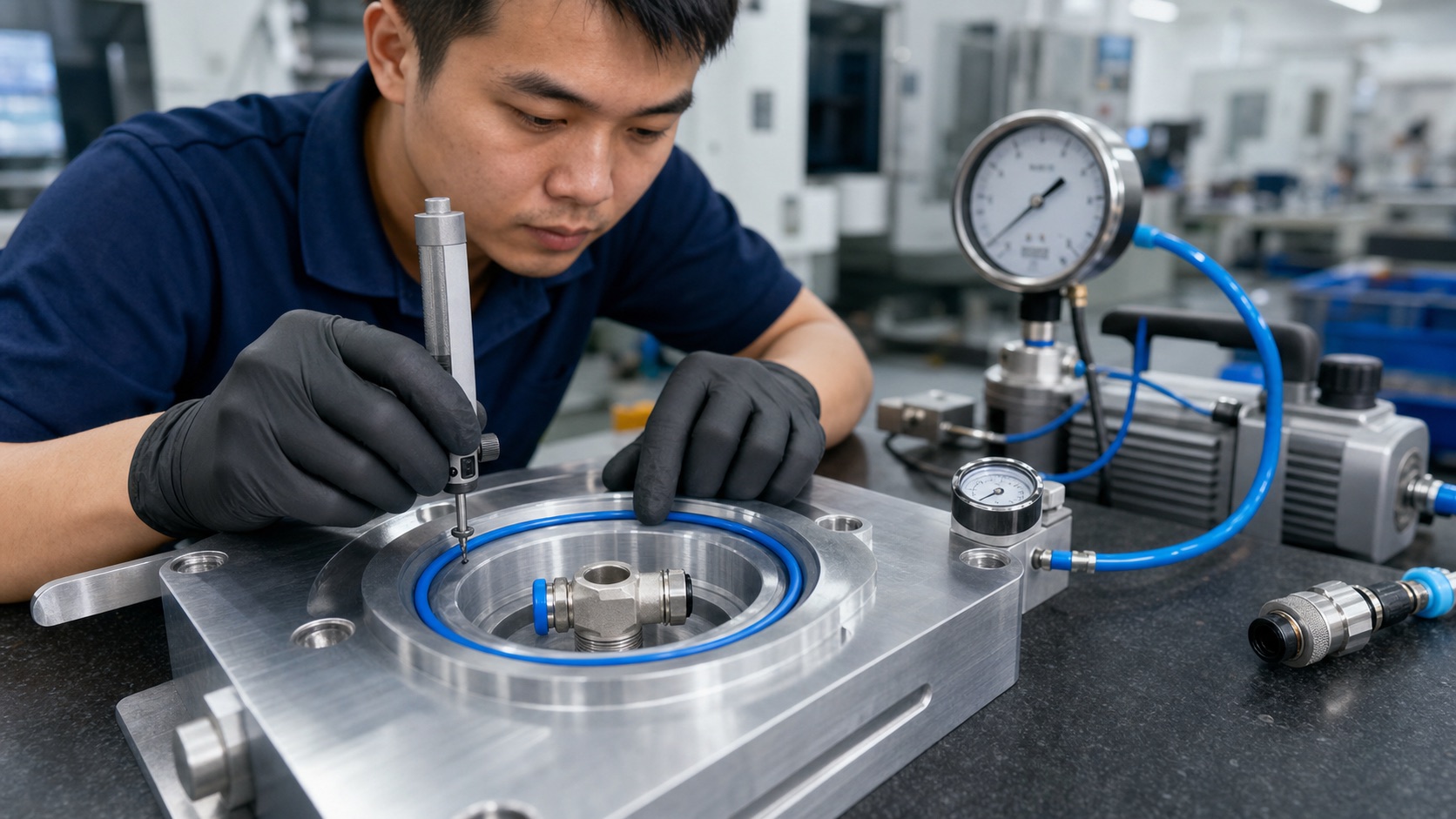
A fixture can leak with a new O-ring when the groove is too deep, too narrow, crossed by tool marks or loaded unevenly. Reliable sealing starts with elastomer choice, squeeze, datums and the air circuit.
Choose cross-section and squeeze for the application
Static seals and moving seals need different squeeze. NBR, FKM or silicone is selected from pressure, temperature, chemical exposure and expected cycles.
Give the O-ring room to deform
Groove width, depth, bottom radius and tolerance must let the O-ring compress without cutting or overfilling. A closed groove path should be continuous and free from setup steps.
Control flatness, roughness and clamping load
Tool marks crossing a sealing face can form leak paths. Suitable flatness and roughness plus evenly distributed clamping let the seal work without distorting the connector.
Separate fixture leakage from product leakage
Verify the system with a sealed plug or master before product testing. Pressure, stabilization time and baseline leakage help distinguish product failure from tubing, valves or fittings.