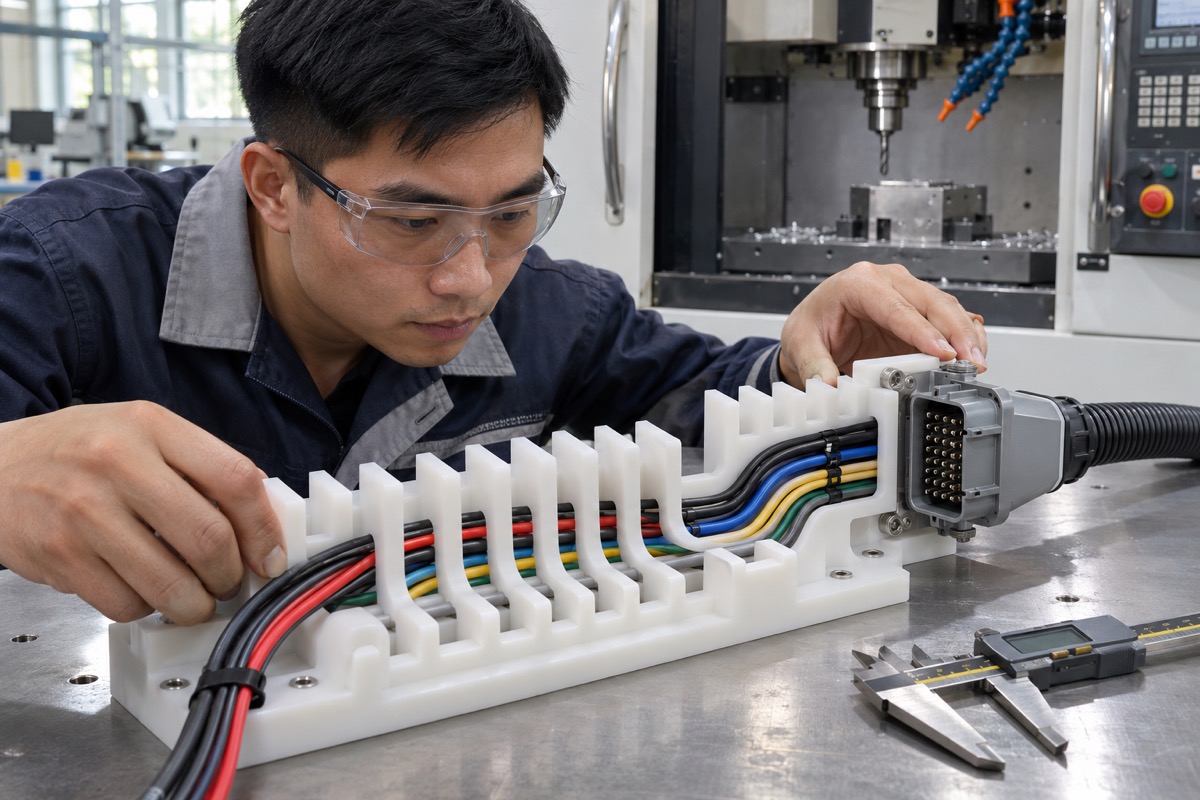
A routing comb can stabilize a multi-wire assembly, but narrow slots or a sharp exit can nick insulation and load the connector. Design around the real cable bundle and the required bend path.
Use real cable samples
Supply connector, wire gauges, jacket materials, bundle diameter and permitted routing. Note any strain-relief or electrical-test step performed while the harness remains in the fixture.
Choose slot spacing and entry
Allocate room for diameter variation and insertion by the operator. Break edges at the slot entrance and keep the exit path clear of a minimum bend requirement agreed with the cable owner.
Machine for cleaning and changeover
POM is useful for non-marring support, but slots still need a stable datum and smooth finish. Make the comb removable where wire colors or connector variants change.
Trial full assembly and removal
Load worst-case bundles repeatedly, inspect jackets for marks and check connector retention and cable strain. Time the actual loading process rather than judging a CAD fit alone.