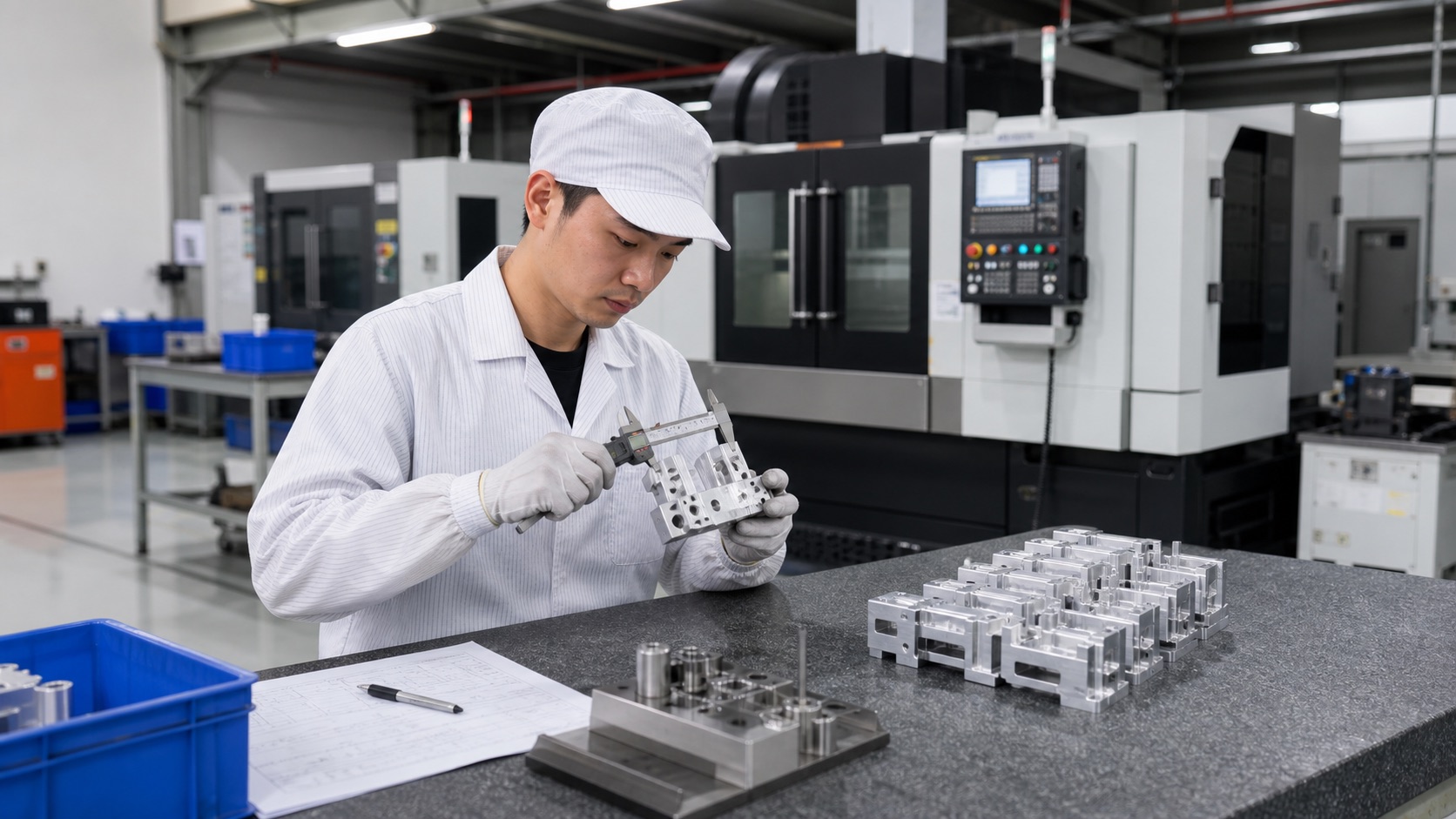
A good CNC prototype is not just a visual sample. Before moving into a small batch, buyers should confirm functional dimensions, material, workholding, surface finish and inspection points from the first order.
Start with the function of the part
When sending a drawing, explain whether the part locates another component, carries load, guides motion, fits into a jig or only protects an assembly. The same shape can require different tolerances, materials and finishes depending on its function.
Inspect the dimensions that affect assembly
Not every dimension needs the tightest tolerance. Priority should go to datum faces, locating holes, slots, flatness, concentricity and contact surfaces. These points decide whether the sample works in a real assembly.
Keep the process stable before scaling quantity
Once the first article is accepted, the program, tool list, clamping method, operation sequence and inspection points should be retained. For a small batch, checking early and final pieces helps catch tool wear or thermal drift.
RFQ information that reduces back-and-forth
A clear RFQ should include STEP or IGS files, 2D drawings, material, prototype and batch quantity, finish, critical tolerances and required delivery date. Assembly photos help engineers evaluate risk before quoting.