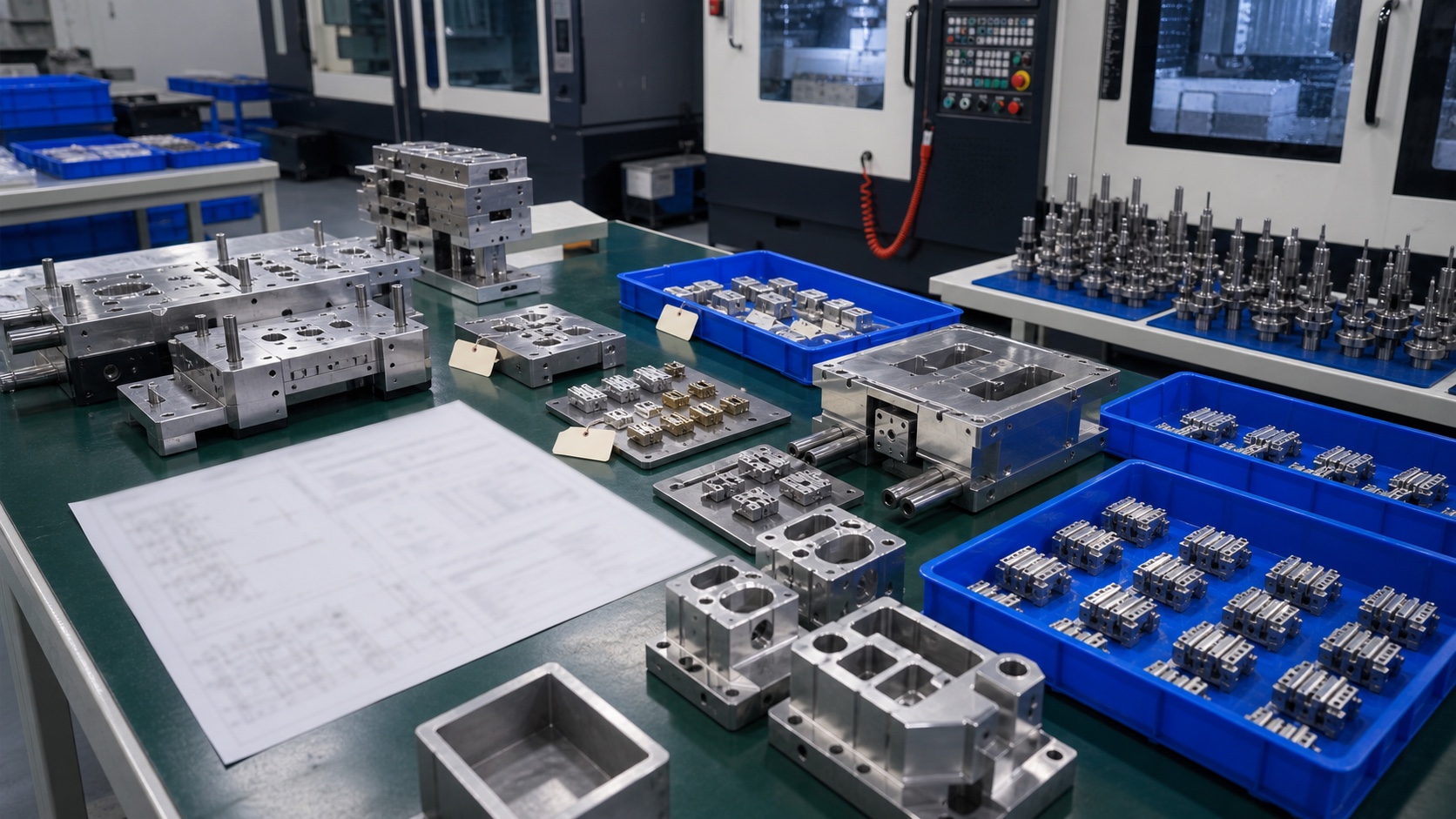
Many CNC projects are delayed not because the part is impossible to machine, but because the sample, drawing, material and inspection standard are not locked at the right time. A clear workflow helps small batches stay stable after sample approval.
Start with the function of the part
Before quoting, buyers should explain where the part is used, whether it positions another component, carries load, requires a visible surface or needs surface treatment. This context helps the CNC supplier recommend material, process and inspection points instead of machining isolated dimensions only.
Lock the drawing after sample approval
Once a sample is approved, the drawing revision should be locked. Any change to holes, slots, datum faces or material should be updated before a small-batch order is released. This matters for fixtures, molds and connector parts because a small design change can affect assembly fit.
Prepare fixtures and inspection steps for the batch
As quantity increases, relying only on manual positioning creates variation. Positioning fixtures, stable tools and a repeatable inspection plan help maintain dimensions across production runs. For multi-face parts, datum setup and machining sequence should be reviewed before cutting the batch.
Keep communication short but data-driven
A good workflow does not require long meetings. It requires clear data: current drawing, quantity, lead time, packaging requirements, inspection standard and approval owner. Vietlink Precision supports customers from CNC samples to fixtures, molds and small-batch production for connector and automation projects.