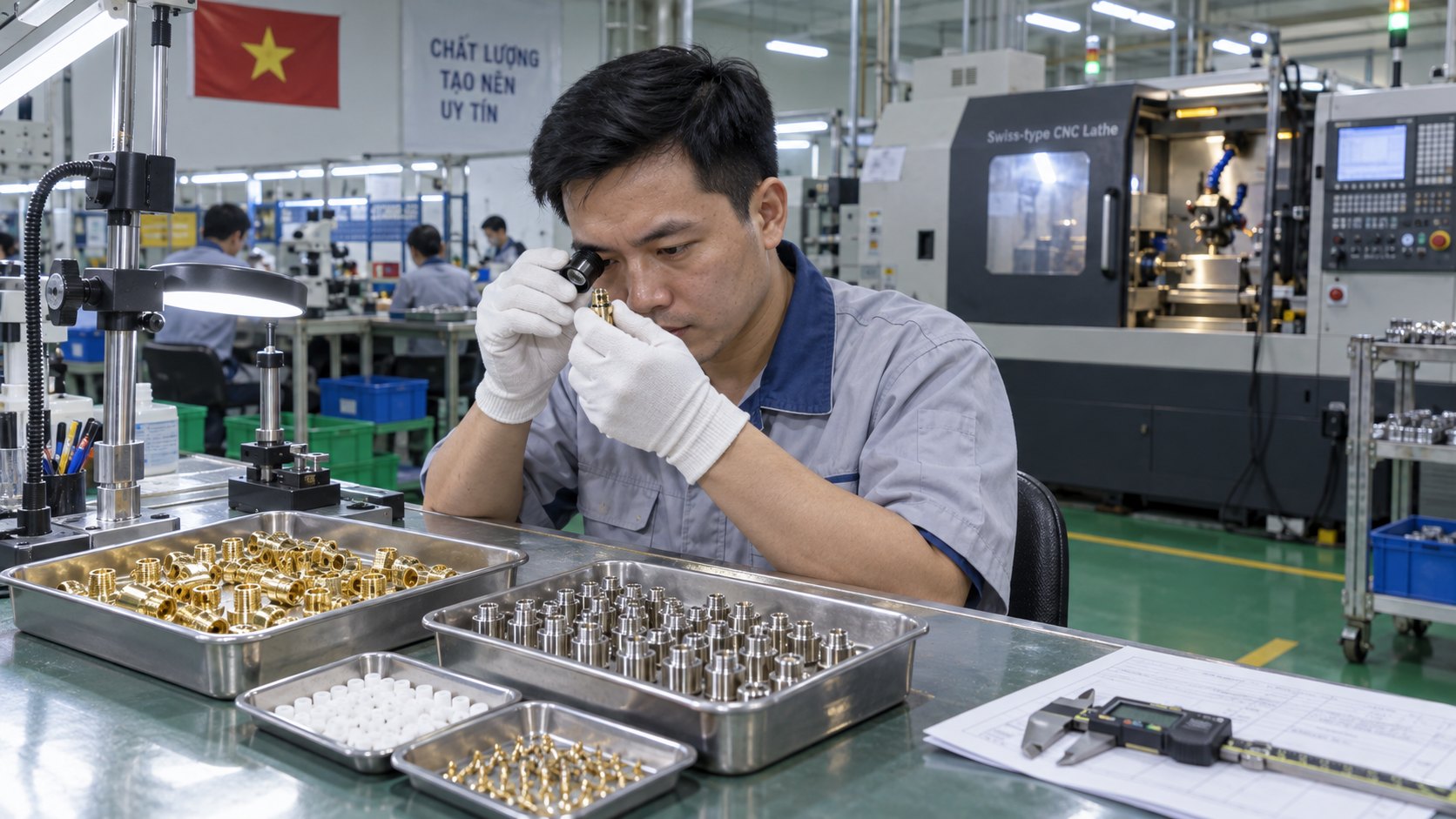
An RF connector body is not only a small threaded shell. The internal steps locate the dielectric and center contact, so burrs, eccentric seats or uncontrolled plating thickness can change assembly force and the electrical geometry.
Machine the coaxial features from one rotating datum
Plan the cable bore, dielectric seat, center-contact passage and mating interface around one turning axis. Finish as many critical internal diameters as possible before part transfer. When cross holes, flats or slots need a second operation, locate from the finished body pilot and protect the mating interface from jaw marks.
Remove burrs without changing the impedance geometry
Inspect thread starts, small internal shoulders, contact passages and cross-hole intersections under magnification. Use controlled edge-break limits rather than general polishing, because an enlarged dielectric seat or rounded reference shoulder can shift the contact. Clean brass chips and plastic swarf before trial assembly.
Define dimensions and tests in the plated condition
State base material, underplate, final finish, selective plating zones and whether dimensions apply before or after plating. Reserve allowance for fitted diameters and threads, and use masking where conductivity or fit requires it. Final checks should cover thread gauges, concentricity, dielectric insertion, contact retention and representative electrical or assembly testing.