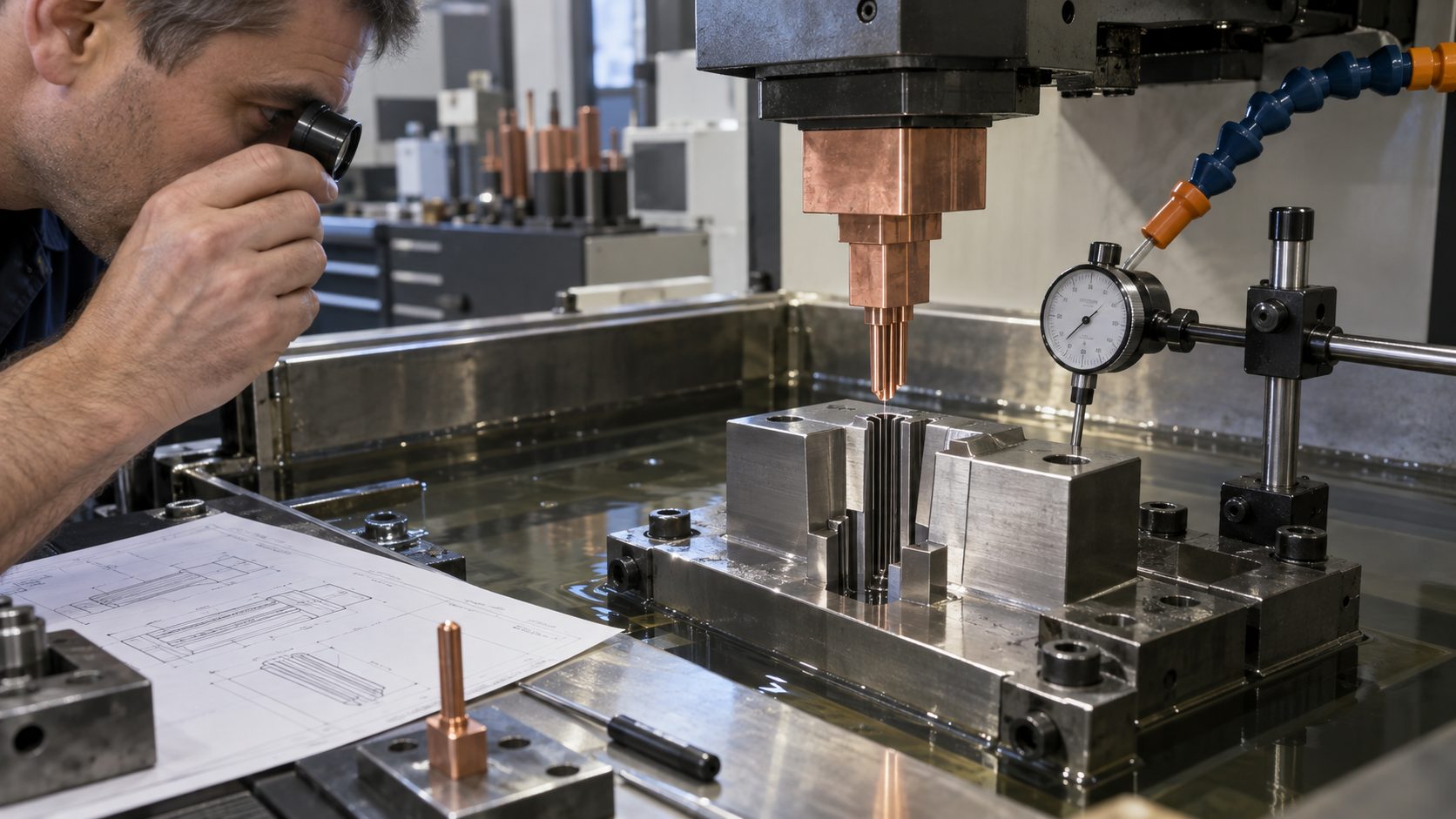
A deep narrow rib is not solved by copying the final cavity into copper. Spark gap, electrode wear, debris evacuation and orbit strategy all change the final width, taper and corner radius.
Separate roughing and finishing intent
Design the roughing electrode for stable material removal and flushing, then reserve predictable stock for finishing. Define undersize by surface and axis rather than applying one blanket value. Sharp ribs, floor radii and side walls do not wear at the same rate.
Use orbiting as a controlled machining variable
Orbit motion can open the working gap, improve debris removal and correct cavity size with fewer electrodes. Program the orbit direction and amount from the feature geometry, machine condition and measured electrode. Excess orbit can enlarge corners or reduce rib thickness, so it must be validated on representative steel and depth.
Verify depth, taper and surface after stabilization
Measure the electrode before use and after roughing, then inspect cavity width at the top, middle and bottom. Confirm floor depth, corner radius and surface condition after the final skim. Record polarity, current, pulse, orbit, dielectric condition and electrode identity so a replacement insert can repeat the process.