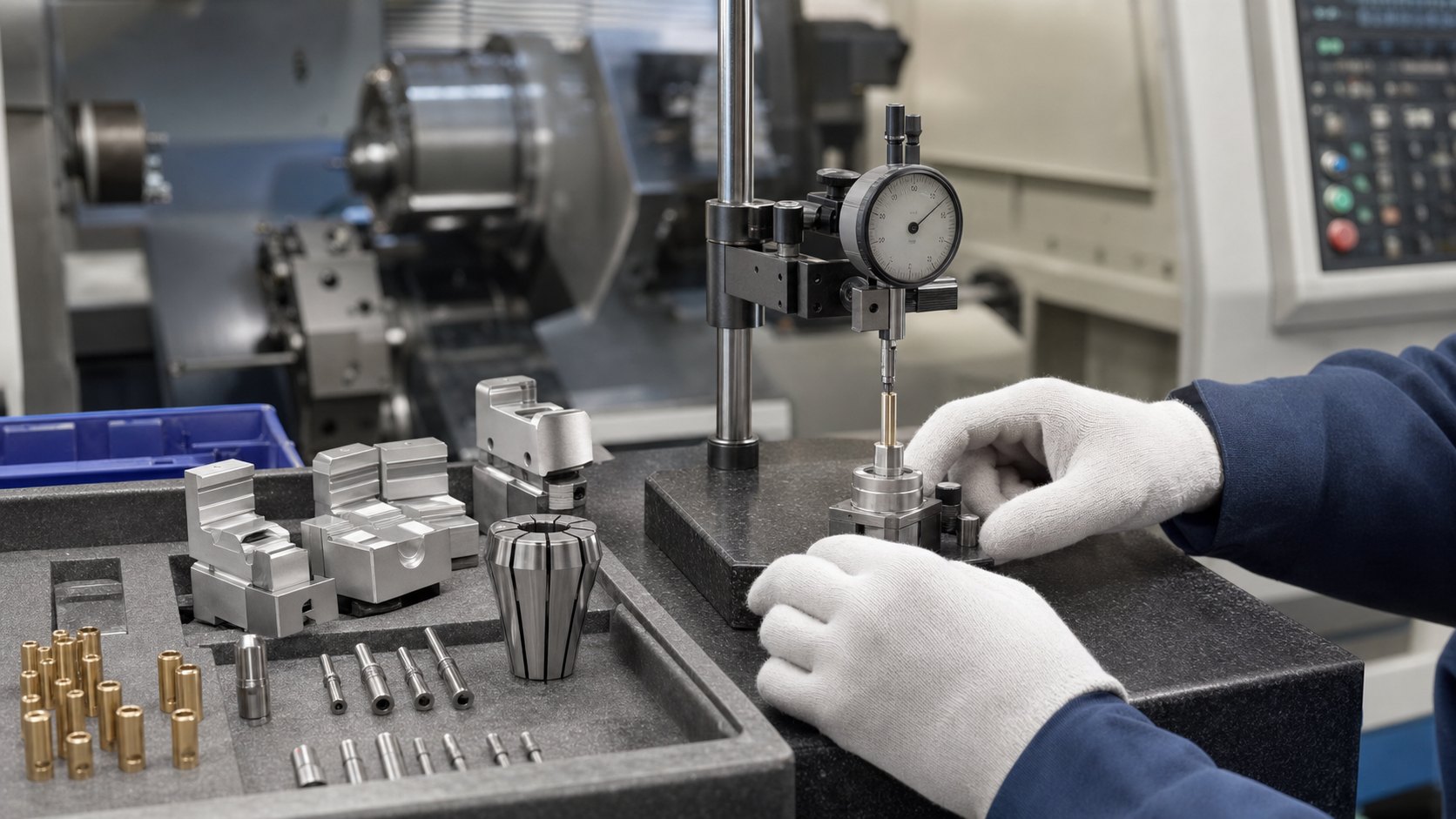
Small turned parts become difficult when the second operation must preserve concentricity without crushing a thin wall or marking a finished surface.
Choose the holding surface from function
Define the functional boundary and keep enough material, access and rigidity around the replaceable or clamped feature.
Machine jaws in their loaded condition
Use repeatable datums, controlled contact and a retention method that does not distort the working geometry.
Use collets for round repeatable families
Match machining, material treatment and inspection to the critical characteristics instead of applying tight requirements everywhere.
Prove the second operation by measurement
Record measured results and design wear items for replacement so maintenance does not require rebuilding the complete assembly.