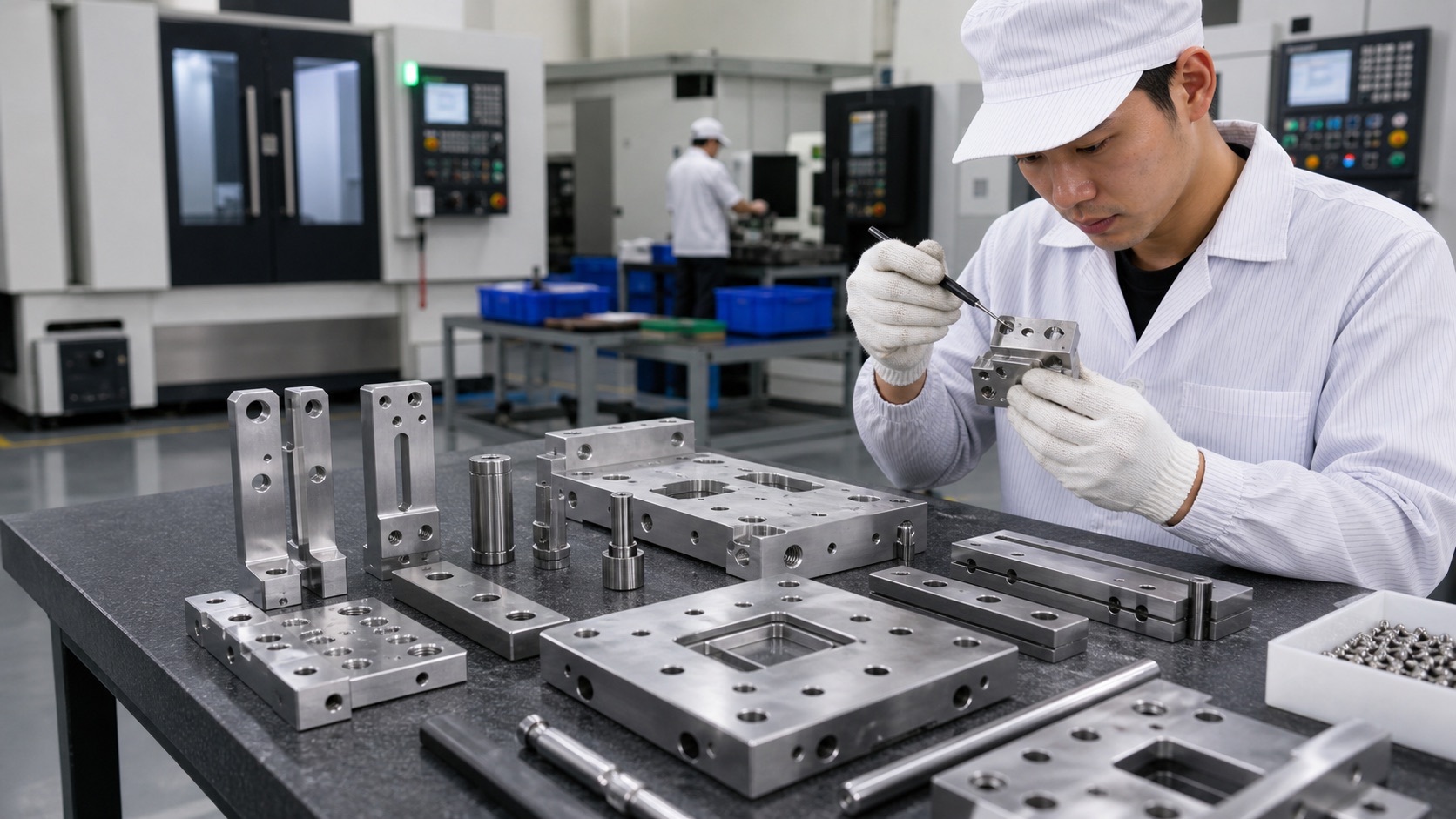
Stainless steel is strong and corrosion resistant, but it is less forgiving than aluminum. Tooling, heat, threads and burrs must be controlled so the part assembles reliably in automation equipment.
When stainless steel is the right choice
Stainless steel is suitable for load-bearing brackets, locating pins, clamp blocks, humid environments and wear areas. For lightweight plates or covers without wear risk, aluminum may be more economical.
304 and 316 in real projects
304 is common and available for many machine parts. 316 offers better corrosion resistance at higher cost. If the material is not fixed, share the operating environment, humidity, chemicals and cleaning requirements.
Threads, holes and burrs need attention
Stainless steel generates heat and wears cutters faster. Small threaded holes, intersecting edges and narrow grooves need the right sequence. In automation assemblies, small burrs can jam sensors, connectors or moving products.
Inspection and surface treatment
Depending on use, stainless parts may need light polishing, passivation or only cleaning and deburring. Drawings should mark functional faces, checked threads, product-contact edges and surface requirements.