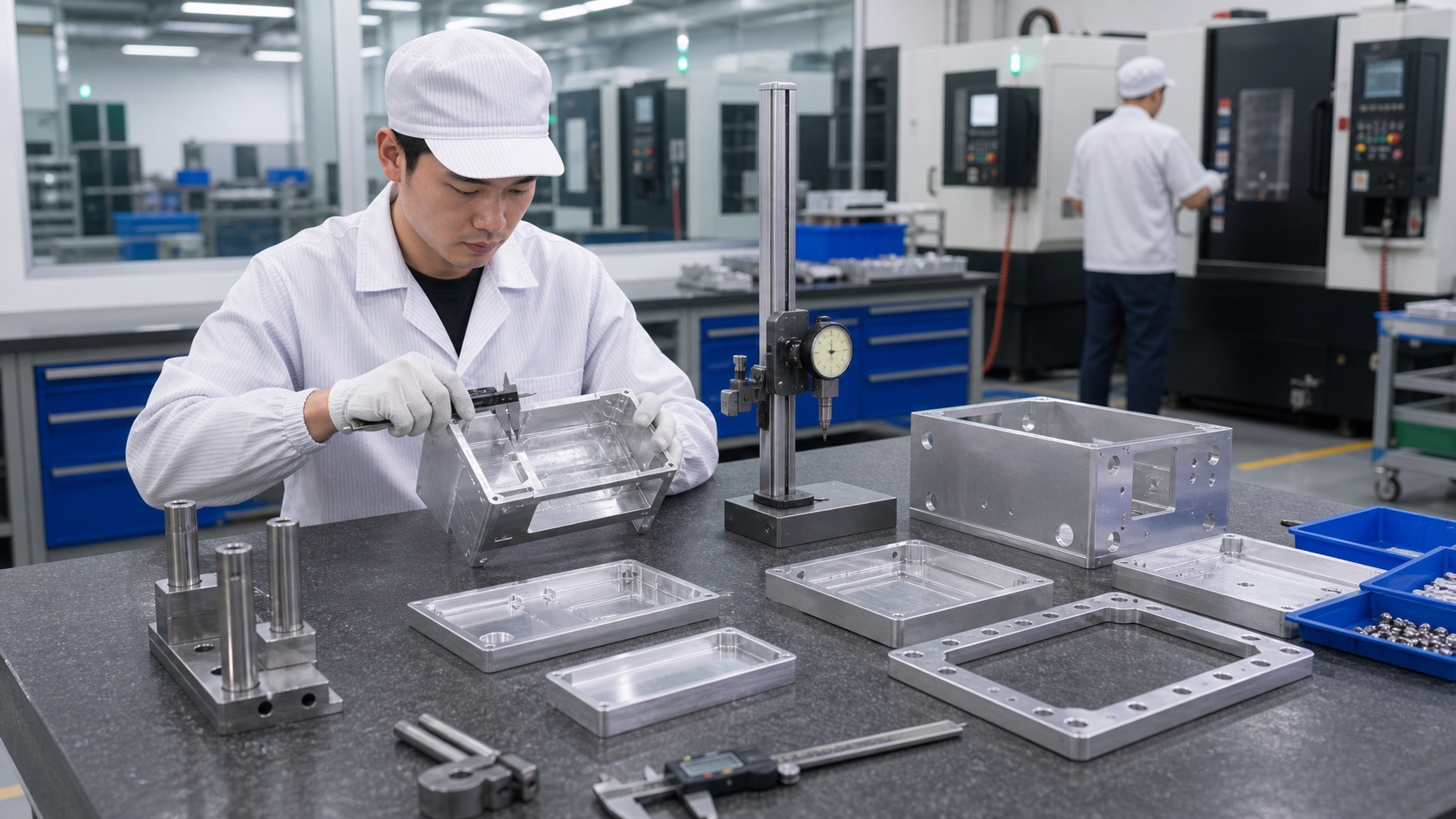
Thin-wall aluminum parts can move during clamping, deep pocket milling and release from the fixture. Stable results depend on design details, stock allowance, machining sequence and inspection method.
Where thin-wall parts usually fail
Device housings, sensor bodies, connector frames and aluminum covers can chatter, dent under clamping or warp after deep pocket milling. The part may look acceptable on the bench but fail when screws, pins or mating parts are assembled.
Design ribs, radii and datum faces early
Ribs, internal radii, dowel holes and measurement datums should be reviewed before machining. Very sharp internal corners and large unsupported walls increase risk. If function allows, larger tool radii and clear functional tolerances reduce both cost and deformation.
Fixture and sequence matter more than machine brand
A stable route may include balanced roughing, leaving stock, supporting thin faces with a fixture and finishing in a controlled order. Clamping force must hold the part without distorting it. For repeat orders, the datum and setup method should be recorded.
Inspection should match the assembly risk
Check not only length and width, but also mounting-face flatness, hole position, perpendicularity and burrs on assembly edges. If anodizing or surface finishing is required, confirm protected areas and critical contact faces before production.