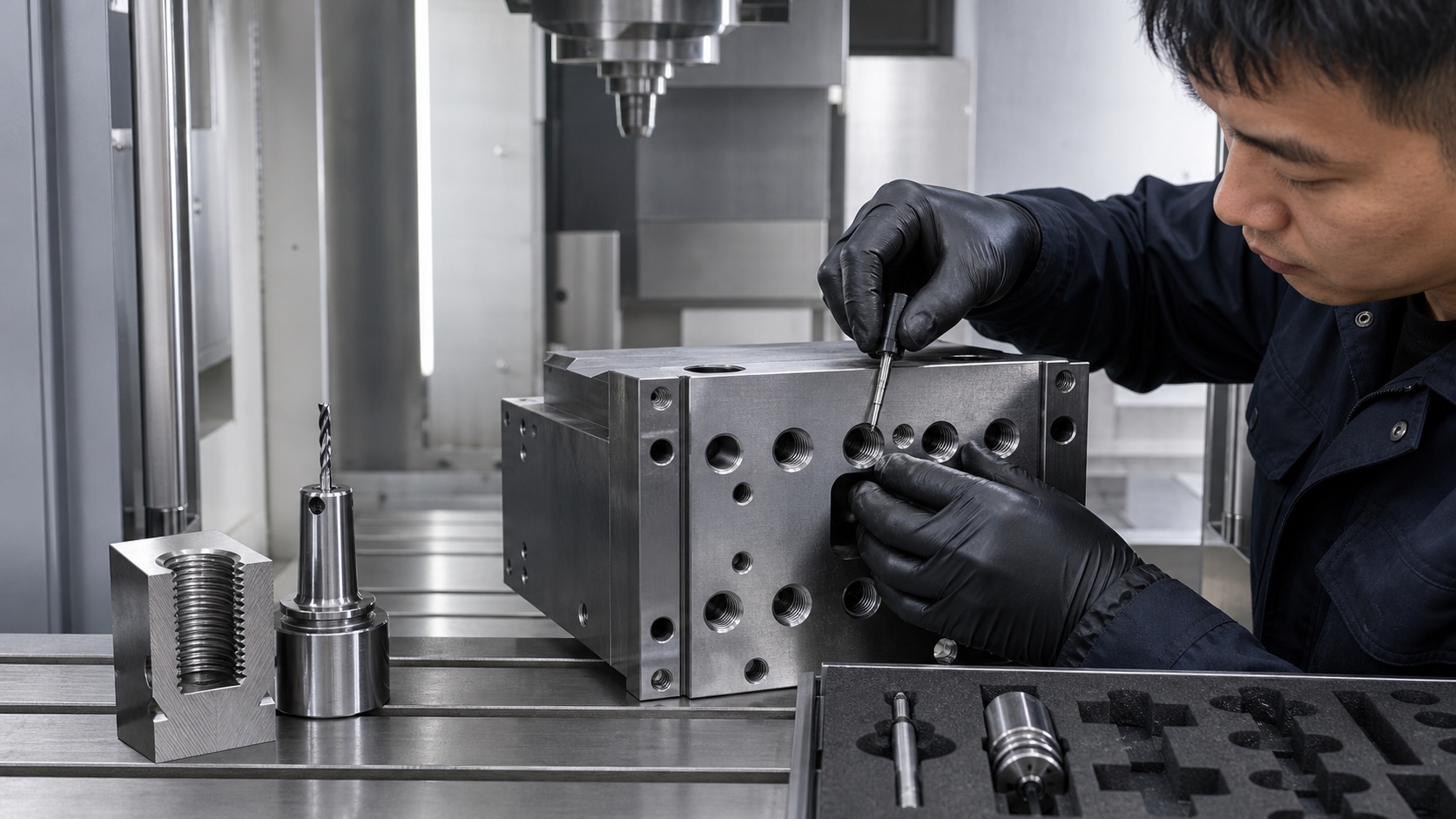
Thread milling controls diameter through cutter compensation, reduces tap-breakage risk and can produce large threads with a smaller tool. Pilot-hole quality, hardness, toolpath and inspection still determine success.
Choose thread milling where part risk is high
For costly inserts, blind holes, hardened steel and larger diameters, thread milling removes less material at once. A damaged cutter is generally easier to recover than a broken tap.
Prepare the hole and confirm hardness
Pilot diameter, effective depth, entry chamfer and bottom relief must be defined. Verify actual hardness and setup rigidity before selecting carbide grade, flute count and cutting data.
Use cutter compensation to reach size
Prove the path on a sample or sacrificial feature, gauge the thread and adjust radius compensation for wear. Lead-in and lead-out should not leave witness marks on a sealing or mounting area.
Inspect function and plan the repair route
GO/NO-GO gauges verify functional limits, while position and perpendicularity are checked from assembly datums. Severely damaged threads may require an insert, controlled weld repair or part replacement after wall-thickness review.