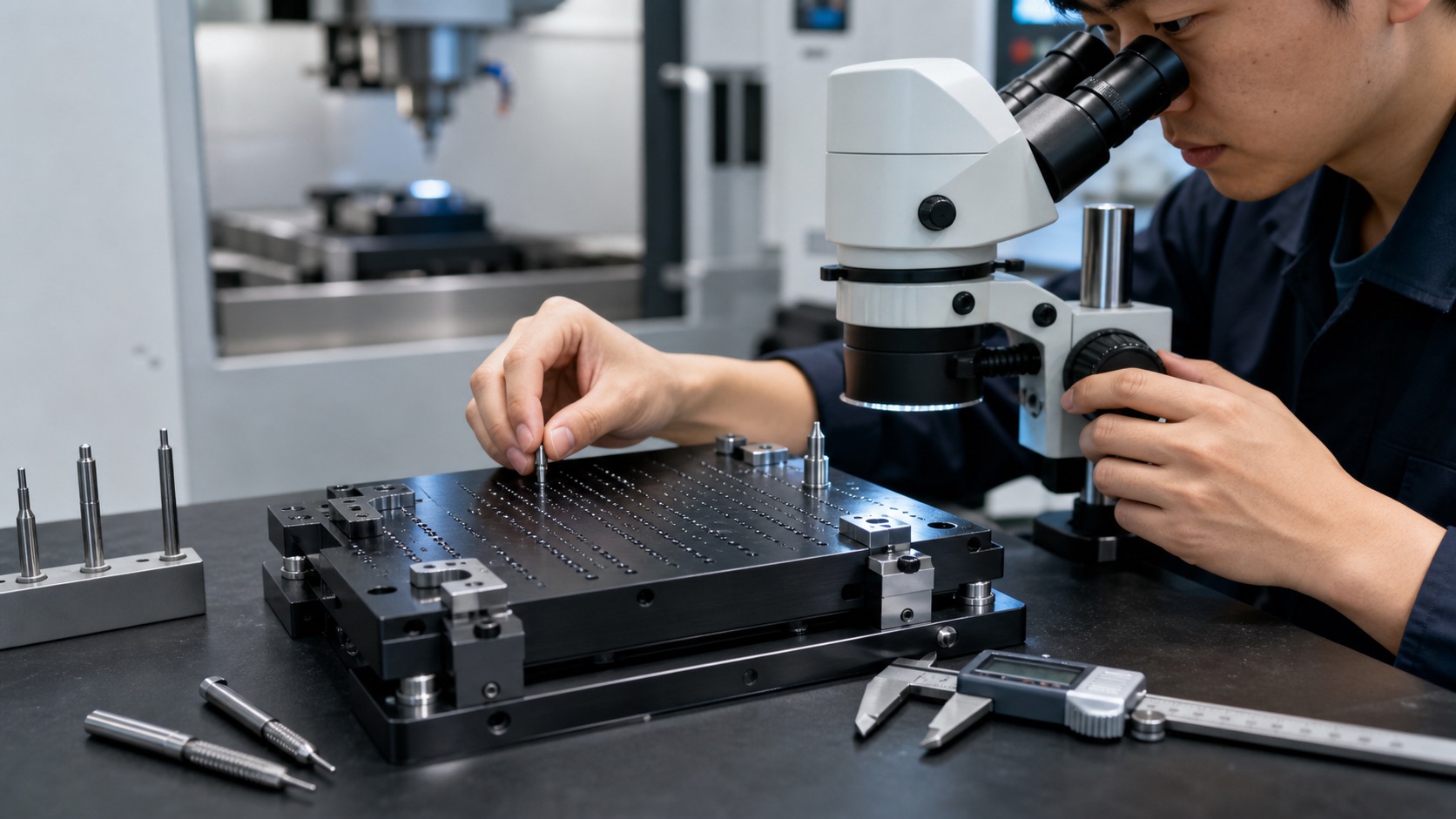
In connector fixtures, M1.6, M2 and other small locating holes often decide whether the assembly repeats accurately. Tool runout, burrs or insufficient thread depth can quickly turn into loading issues, unstable clamping and inspection drift.
Why small holes are easy to miss
Small drills have limited rigidity. They can wander when the entry face is not flat or when machining hard stainless steel, anodized aluminum or engineering plastics. In connector tooling, dense hole patterns also mean that a small burr can interfere with locating pins or molded connector bodies.
Separate the operation into controlled steps
A reliable fixture plate is usually processed through datum milling, pilot drilling, final drilling, reaming or tapping, controlled deburring and hole cleaning. For M1.6 and M2 threads, spindle speed, cutting fluid, useful thread depth and tap life need to be managed carefully to prevent broken taps.
Use pin gauges and thread checks
Visual inspection is not enough for critical locating holes. Go/no-go pin gauges, 2D measurement, microscope inspection and thread verification should be used for the features that affect assembly repeatability. First-article records help stabilize later batch production.
When to use steel bushings or threaded inserts
Threads cut directly in aluminum may wear if the fixture is opened and adjusted often. For high-use points, steel bushings, threaded inserts or replaceable modules can extend fixture life and make maintenance easier.